Zahran Marble
A central question is: What causes "pitting" in old marble surfaces? These small cavities often develop through several interacting processes, not one isolated defect. Moisture can enter microscopic pores and dissolve vulnerable minerals. Salts may then crystallize inside the stone, creating pressure beneath the polished surface. Acidic cleaners, citrus spills, and atmospheric pollution can also weaken marble’s calcite structure. Repeated scrubbing may enlarge those softened areas.
Look closely.
In conservation work, the pit’s shape, depth, and surrounding discoloration provide useful evidence. Rounded depressions may suggest chemical erosion. Sharp-edged cavities can indicate abrasion, trapped grit, or mineral loss along a natural vein. Rust-colored marks may point toward iron-bearing impurities or corroding fixtures nearby. In cold climates, absorbed water can freeze, expand, and open existing weaknesses. Even indoor marble can suffer when damp floors, poor ventilation, or unsuitable sealers remain unnoticed.
A quick diagnosis can be wrong. Old marble may contain previous repairs, wax layers, or residues that hide the original cause. Professional assessment usually combines close inspection, moisture testing, cleaning history, and knowledge of the stone’s geology. Harsh polishing or aggressive acid treatments can remove valuable surface evidence and deepen the damage. The safest approach is careful documentation before treatment. Photograph the pits beside a scale, note nearby water sources, and avoid testing strong chemicals casually. The stone is telling a story, but not always clearly. Understanding that story helps owners choose gentler cleaning, improved moisture control, and appropriate conservation instead of repeated cosmetic repairs.
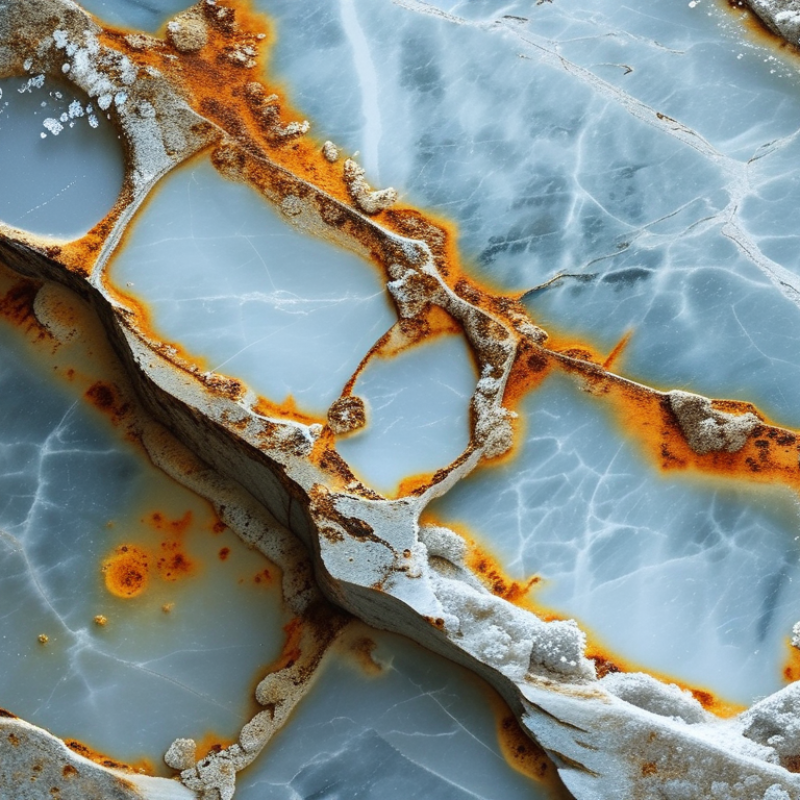
What Causes Pitting in Old Marble Surfaces?
Marble contains calcite, a calcium carbonate mineral with a Mohs hardness of about 3. Pure calcite ranks 3, while some marble varieties reach 4 because of dolomite, quartz, or other minerals. The Natural Stone Institute’s Dimension Stone Design Manual explains that mineral composition strongly affects stone performance. This variation matters.
A marble floor may look solid but remain chemically vulnerable. Mild acids from citrus juice, vinegar, acidic cleaners, or wet soil can react with calcite. The reaction removes tiny mineral areas and leaves dull spots or shallow pits. The U.S. Geological Survey’s Mineral Commodity Summaries identifies carbonate stone as a major dimension-stone category, but commercial classification does not guarantee equal durability. Two slabs can age differently.
Hardness is not toughness. A Mohs value of 3–4 means ordinary dust can contain harder particles, including quartz near hardness 7. Foot traffic can press those particles into the surface, especially near entrances. Repeated cleaning may enlarge weak grain boundaries. Moisture can also carry salts into existing pores, where crystallization widens small defects. ASTM guidance for dimension stone emphasizes evaluating absorption, finish, and service conditions, not appearance alone.
Inspect the pit edges closely. A chalky rim suggests chemical etching; sharp scratches suggest abrasion. I have found that diagnosis is often imperfect without testing. A soft acidic cleaner may seem harmless, yet repeated exposure can quietly change the surface. Repair decisions should follow mineral testing, absorption data, and the stone’s original finish.
What Causes Pitting in Old Marble Surfaces?
Acid Etching from Cleaners with pH Below 7
Old marble often develops tiny pits after repeated contact with acidic cleaners. Marble contains calcite, a calcium carbonate mineral that reacts with acids. Natural Stone Institute guidance identifies acidic products as a major etching risk for calcite-based stone. The damage may begin as a dull patch, then become rough under a fingertip.
pH explains why mild-looking products can still cause harm. A pH 4 cleaner contains about 1,000 times more hydrogen ion activity than a neutral pH 7 solution. The U.S. Geological Survey’s 2024 mineral materials reporting places marble within the carbonate-stone category, supporting its known chemical sensitivity. Each cleaning cycle can dissolve microscopic areas around pores and existing scratches. Moisture then settles in those weakened spots, making the pits appear darker.
I have seen this mistake during maintenance inspections: the floor looked dirty, so stronger cleaner was used. It looked worse afterward. That assumption needs questioning. Water, a pH-neutral stone cleaner, and a soft microfiber pad are safer starting points. Test a hidden area first, because polished and honed marble can respond differently. Severe pitting may require professional honing, but aggressive scrubbing rarely repairs dissolved stone.
Acid etching from cleaners with a pH below 7 can dissolve the calcium carbonate in marble. The chart shows the scientifically defined hydrogen-ion concentration relative to neutral pH 7.
Each one-point decrease in pH represents a tenfold increase in hydrogen-ion concentration. Stronger acidity can increase the risk of surface dulling, roughness, and pitting, especially on weathered marble.
Pitting often begins with abrasive grit, not age alone. Sand, soil, and tiny stone particles enter on shoe soles. They become grinding material beneath repeated foot traffic. Entryways, hallways, and stairs usually show the deepest wear. Over time, softer mineral areas wear faster than harder areas. Small depressions then collect more dirt and moisture.
Improper polishing can accelerate this damage. Excessive pressure, coarse abrasives, or uneven passes may remove the surface unevenly. Heat from aggressive equipment can also affect some marble finishes. I have seen floors that looked clean but felt rough under a fingertip. That roughness often revealed early pitting. It is easy to blame poor stone quality. Sometimes, cleaning habits caused the problem.
Tips: Use clean entrance mats and remove grit regularly. Sweep with a soft, non-abrasive tool. Avoid harsh powders and stiff brushes. Test any cleaner in a hidden area first. Never polish deeply pitted marble without checking its thickness and condition. A trained stone technician can inspect the surface under angled light and measure damaged areas. They may recommend honing, filling, or controlled resurfacing. Results vary, especially when previous repairs are hidden. A small test area matters.
Old marble can develop tiny pits when moisture repeatedly enters and leaves its open pores. Water may carry dissolved salts from mortar, soil, cleaning residues, or nearby masonry. As the surface dries, salt crystals grow inside narrow pore spaces. Their pressure pushes against the marble’s mineral structure.
The damage often appears as pinholes, shallow cavities, or a rough, sugary texture. It may worsen near floors, joints, windows, and poorly ventilated walls. Repeated wetting and drying matters more than one isolated spill. Warm air can accelerate evaporation. So can direct sunlight. The surface seems dry, but deeper pores may still hold moisture.
A careful inspection should compare damaged and stable areas. Look for powdery deposits, tide marks, damp joints, and changes after rainfall. Moisture readings can help, although one reading rarely explains the whole problem. Laboratory salt analysis is more reliable when the cause remains uncertain. Abrasive cleaning may remove loose crystals but can enlarge the pits.
The repair decision is not always obvious. Sealing the surface too soon can trap moisture beneath it. That mistake may redirect damage into nearby marble. Gentle cleaning, improved drainage, slower drying, and salt reduction usually deserve attention first. Even then, some pitting is irreversible. Conservative treatment often preserves more evidence and more stone.
What Causes Pitting in Old Marble Surfaces?
Freeze–Thaw Damage When Water Repeatedly Drops Below 0°C
Pitting in old marble often begins with water entering tiny pores, hairline cracks, or worn joints. When temperatures fall below 0°C, that trapped water freezes and expands by roughly nine percent. The pressure pushes against the marble’s internal structure. One cycle may cause little visible harm. Repeated cycles can slowly widen weak spots and detach small grains from the surface.
Look closely.
Outdoor steps, window ledges, and poorly drained floors face greater exposure. Meltwater may collect in shallow depressions, then freeze overnight. During inspections, I check for powdery edges, darker moisture marks, and pits that feel rough under a fingertip. A dry surface can hide deeper damage. Marble near leaking gutters or open joints deserves extra attention.
Not every pit comes from freezing. Acidic cleaners, soluble salts, abrasion, and weak historic repairs can produce similar marks. That distinction matters. Filling a pit without controlling moisture may only conceal the problem temporarily. Cleaning should remain gentle, because aggressive scrubbing can enlarge fragile cavities. Repairs also need compatible materials and proper curing conditions. I have seen attractive patches fail after one harsh winter. The surface looked repaired, but water still entered behind it. A careful assessment of drainage, cracks, and seasonal moisture movement should guide any treatment.
| Factor or Condition | Relevant Fact | How It Contributes to Pitting | Typical Surface Evidence | Relative Risk |
|---|---|---|---|---|
| Temperature below freezing | Water freezes at approximately 0°C under standard atmospheric pressure. | Water held in pores and small cracks becomes ice. Repeated freezing can generate pressure against the surrounding marble. | Small cavities, widened hairline cracks, and roughened edges after cold-weather exposure. | High |
| Expansion of freezing water | Ice occupies about 9% more volume than the same mass of liquid water. | Expansion can exert stress on pore walls, grain boundaries, and pre-existing fractures, especially where drainage is poor. | Progressive flaking, shallow pits, granular loss, or fragments detached from vulnerable areas. | High |
| Repeated freeze–thaw cycles | Damage is cumulative; repeated transitions through freezing and thawing are more significant than a single cold event. | Each cycle can enlarge microscopic defects, allowing more water to enter during the next wetting event. | Pitting becomes denser or deeper over successive winters, often around existing defects. | High |
| Water absorption and pore saturation | Marble is a crystalline carbonate stone with porosity and absorption that vary by geological type and finish. | The more water retained within accessible pores before freezing, the greater the potential for freeze-related stress. | Moisture-darkened areas, damp joints, persistent wet spots, and pits concentrated near water sources. | High |
| Pre-existing cracks and joints | Cracks and open joints provide pathways for water penetration and locations for ice formation. | Ice pressure can widen weak zones and break off small pieces, leaving irregular pits. | Linear cracking, chipped joint edges, and pits aligned with seams or fractures. | High |
| Poor drainage or water ponding | Flat surfaces, blocked outlets, failed sealant, and clogged joints can prolong wetness. | Longer wet periods increase the chance that the marble is water-filled when temperatures fall below freezing. | Pits in depressions, along edges, beneath drips, or beside blocked drainage paths. | High |
| Repeated wetting and drying | Rain, snowmelt, cleaning water, and condensation can repeatedly introduce moisture. | Wetting opens the route for water entry; drying may leave moisture trapped in deeper pores or cracks before the next freeze. | Patchy deterioration and clusters of pits near exposed or frequently washed areas. | Moderate–High |
| Marble mineral softness | Marble is composed mainly of recrystallized calcite; calcite has a Mohs hardness of 3. | The relatively soft mineral structure can lose grains or polish when freeze-related cracking is combined with abrasion. | Dull, powdery, or grainy areas surrounding pits; increased wear on exposed surfaces. | Moderate |
| Salt contamination | Dissolved salts may enter from de-icing materials, soil, masonry, or contaminated water. | Salt crystallization can add stress during drying and may act together with freeze–thaw damage. | White deposits, powdering, scaling, and pitting near ground level or splash zones. | Moderate–High |
| Surface coatings or sealers | A coating can reduce surface wetting, but a poorly matched or deteriorated coating may trap moisture. | Moisture retained beneath a failing film may increase localized freeze-related stress and conceal deterioration. | Blistering, peeling, dark edges, localized pits, or a patchy gloss pattern. | Moderate |
| Preventive control | Keep water from entering and remaining in the stone during freezing conditions. | Improve drainage, repair open joints, remove standing water, use compatible breathable treatments, and avoid abrasive de-icing practices. | Fewer new pits, stable cracks, faster drying, and no recurring moisture staining. | Most effective |
Note: Actual susceptibility depends on the marble’s pore structure, existing defects, moisture exposure, drainage, and the number and severity of freeze–thaw cycles.
Marble contains calcite, which reacts with acidic solutions. Repeated cleaning can dissolve tiny areas around pores and scratches.
Yes. A pH 4 cleaner has about 1,000 times more hydrogen ion activity than a neutral pH 7 solution.
It may begin as a dull patch. Later, the surface can feel rough beneath a fingertip.
Moisture settles inside weakened pores. Those damp areas often look darker than surrounding marble.
Water carries dissolved salts into open pores. As the surface dries, growing crystals press against the marble’s mineral structure.
Check floors, joints, windows, and poorly ventilated walls. These areas often experience repeated wetting and slow drying.
Look for pinholes, powdery deposits, tide marks, damp joints, or a sugary texture. One sign alone may mislead you.
Compare damaged and stable areas. Check moisture patterns after rainfall, but remember one moisture reading rarely explains everything.
Start with water, a pH-neutral stone cleaner, and a soft microfiber pad. Test a hidden area first.
Usually not. Scrubbing may enlarge dissolved areas, while severe pitting may need professional honing. Some damage remains irreversible.
What causes "pitting" in old marble surfaces is mainly the stone’s natural softness and long-term exposure to damaging conditions. Marble is composed largely of calcite, which has a Mohs hardness of only 3–4, making it vulnerable to scratching, abrasion, and surface wear. Cleaners or liquids with a pH below 7 can chemically react with calcite, creating acid etching that gradually weakens the surface and leaves small depressions. Grit carried by shoes, repeated foot traffic, and improper polishing methods can also wear away the marble unevenly.
Moisture is another important factor. Water entering open pores may evaporate and leave behind salt crystals that expand and create internal pressure. Repeated moisture cycling can deepen these defects over time. In colder environments, water trapped inside the marble may freeze when temperatures fall below 0°C, expand, and cause freeze–thaw damage. Together, chemical attack, abrasion, salt crystallization, and freezing can transform minor surface wear into visible pitting.
