Zahran Marble
When considering marble for your home, the choice between honed and polished finishes is crucial. Industry expert Sarah Johnson, a renowned interior designer, emphasizes, “Choosing the right finish can greatly affect both aesthetics and functionality.” So, what are the pros and cons of honed vs polished marble?
Honed marble offers a matte finish. This texture can hide scratches better than polished marble. It is less slippery, making it a safer choice for floors. However, honed surfaces are more porous, making them prone to stains if not sealed properly. On the other hand, polished marble shines brilliantly. It reflects light beautifully, adding elegance to any space. Yet, it can be slippery and shows wear more easily over time.
Your choice depends on your lifestyle and aesthetic preferences. Both finishes have unique characteristics that can complement your design vision. It is important to weigh these aspects seriously. Each option has its inherent benefits and drawbacks. You may find yourself leaning towards one finish over the other, but it is wise to evaluate both thoroughly.
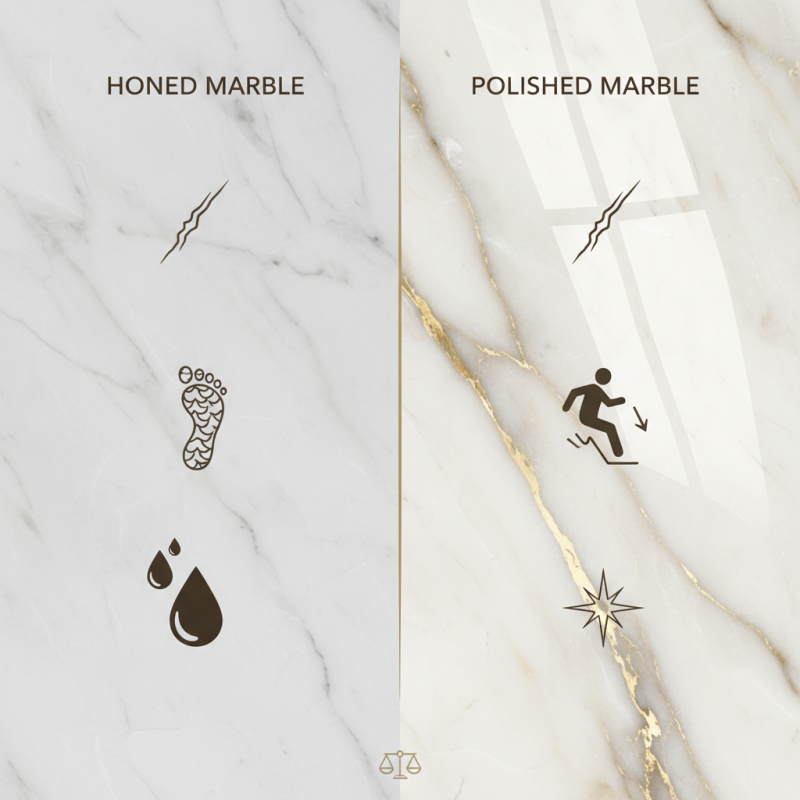
Honed marble is renowned for its unique characteristics. It has a matte finish that offers a softer, natural look. This surface is less slippery, making it a safer choice for areas with high foot traffic. The texture of honed marble can also conceal scratches and stains better than polished varieties, which may be useful in busy households.
One of the notable benefits of honed marble is its ability to absorb light differently. This quality enhances its color and pattern, allowing for a more rustic aesthetic. However, it is important to note that honed marble is more porous. It requires regular sealing to prevent stains and moisture absorption. Some users find this maintenance challenging and may face issues over time.
Despite its advantages, honed marble does have drawbacks. The softer finish can show fingerprints and smudges easily. This may lead to a need for frequent cleaning. Moreover, many users are unsure about its durability compared to polished marble. Although it’s resilient, some may find themselves reflecting on their choice if they prioritize a high-gloss appearance.
Polished marble is renowned for its stunning aesthetic appeal. The glossy finish reflects light beautifully, enhancing the visual impact of any space. This shine is not just for show; it can make rooms appear more spacious and inviting. According to the Marble Institute of America, polished marble can increase property value by up to 15%.
However, polished marble has its drawbacks. It is more susceptible to scratching and staining than honed marble. Regular maintenance is essential to preserve its appearance. Cleaning solutions with acidic properties can damage the surface, requiring careful selection of products. The high gloss can also show smudges and fingerprints more prominently, necessitating frequent cleaning.
The weight and cost of polished marble can surprise homeowners. Marbles are heavy and can increase installation costs due to the additional structural support needed. While polished marble is beautiful, it lacks the slip resistance of honed finishes. This requires consideration in high-traffic areas or homes with small children. Ultimately, the choice between polished and honed marble should reflect individual priorities in aesthetics, maintenance, and functionality.
When choosing between honed and polished marble, it’s essential to explore their unique characteristics. Honed marble features a matte finish, giving it a softer, less reflective appearance. This finish is more resistant to scratches and etching, making it suitable for high-traffic areas. Many homeowners enjoy its natural look, which enhances rustic and traditional interiors.
However, honed surfaces can be more porous. They may require regular sealing to avoid stains.
Conversely, polished marble has a shiny, reflective surface that adds elegance to any space. This glossy finish enhances the color and veining patterns of the stone, creating stunning visual interest. Polished marble is less absorbent than honed, making it easier to clean and maintain.
Nevertheless, it’s more prone to scratches and visible etching from acidic substances. This is a significant drawback in kitchens where lemon juice or vinegar can cause damage.
Considering these differences is crucial. The decision between honed and polished marble should align with your aesthetic preferences and practical needs. Reflect on your lifestyle. Each option presents trade-offs, and understanding these nuances will lead to a more informed choice for your home.
Honed marble offers a unique texture that enhances interior design. This finish provides a soft, matte appearance, making it ideal for various spaces. Homeowners often appreciate its warm, inviting feel. The understated look complements modern, minimalist styles. Additionally, honed marble is less slippery, making it a safer choice for kitchens and bathrooms.
However, it does come with drawbacks. The porous nature of honed marble means it can stain more easily than polished alternatives. This aspect requires diligent maintenance to keep it looking fresh. Regular sealing is crucial to protect against spills and dirt. Moreover, minor scratches can be more visible on the surface.
Despite these challenges, honed marble remains a popular choice for many designers. Its aesthetic appeal and practical benefits can outweigh the cons. Choosing the right finish ultimately depends on individual preferences and use cases. Understanding these pros and cons helps make an informed decision.
Polished marble shines with a luxurious finish that many homeowners find appealing. It reflects light beautifully, enhancing the aesthetic of any space. This finish creates a sophisticated look perfect for living rooms or upscale kitchens. However, polished marble is prone to scratching and etching. High-traffic areas could suffer from wear, diminishing its beauty over time.
Careful maintenance is crucial for polished marble. Regular sealing can help, but wear and tear will eventually take its toll. It's vital to use gentle cleaners to avoid damaging the surface. Always avoid acidic substances, as they can etch the marble.
Consider the applications where you plan to use polished marble. In bathrooms, it can create a stunning environment. Yet, the same material might be slippery when wet. Users need to balance aesthetics and safety. Installing it in less trafficked areas may prolong its glory while reducing maintenance worries.
: Honed marble is a type of marble with a matte finish. It offers a natural, softer look.
Its matte surface is less slippery than polished options. This makes it safer for busy spaces.
Yes, honed marble is porous and needs regular sealing to prevent stains and moisture absorption.
It can show fingerprints and smudges easily. Frequent cleaning may be necessary.
Honed marble has a softer, less reflective appearance, while polished marble is shiny and elegant.
Yes, it is resilient, but some may worry about its durability compared to polished marble.
Reflect on your lifestyle, aesthetic preferences, and practical needs. Each choice has trade-offs.
Yes, honed marble can hide scratches better than polished marble. This is beneficial in busy homes.
Yes, polished marble is less absorbent, making it easier to clean and maintain.
Users may struggle with regular maintenance, such as sealing, and keeping it clean from smudges.
In the debate of honed vs polished marble, understanding their unique characteristics and benefits is crucial for making informed design choices. Honed marble features a matte finish that provides a more natural look and is less slippery, making it suitable for various interior spaces. On the other hand, polished marble boasts a glossy finish that enhances color richness and depth, offering an elegant aesthetic for applications like countertops and flooring.
When exploring the pros and cons of honed vs polished marble, it's essential to consider factors such as durability, maintenance, and aesthetic preferences. Honed marble can resist scratches and hide stains better, while polished marble may require more upkeep to maintain its shine. Ultimately, the decision hinges on the specific needs and style desired for the space, as each type of marble brings distinct advantages and challenges to the table.
