Zahran Marble Zahran Marble

How to Remove Oil Stains from a Marble Kitchen Island?

Time:2026-10-09 Author:Madeline
0%

How to remove oil stains from a marble kitchen island is not a question answered by stronger chemicals. Marble contains pores and mineral layers that can absorb cooking oil beneath the visible surface. A dark ring near the cooktop may look small, yet it can spread under the polish. I have seen homeowners scrub harder, only to create a larger dull patch. That mistake is understandable, but avoidable.

Fred M. Hueston, Ph.D., a stone restoration consultant and author of The Stone and Tile School, explains, “You must understand the stone before you attempt to clean it.” His advice reflects a practical truth: identify the marble finish, estimate the stain’s age, and test every treatment in a hidden area. Fresh oil may respond to gentle blotting and a pH-neutral stone cleaner. Older marks often require a poultice that draws oil outward gradually. Never begin with vinegar, lemon juice, abrasive powders, or chlorine bleach. These products can etch marble or damage its protective sealer.

Small details matter. Use white paper towels, not dyed cloth. Keep the surface dry between attempts. A poultice needs patience.

This guide will explain how to remove oil stains from a marble kitchen island without guessing or rushing. It will cover surface preparation, safe absorbent materials, application time, residue removal, and resealing decisions. Results may vary. Deep oil can remain faintly visible after one treatment, especially on honed marble. That is not failure. It is a reminder that restoration sometimes requires repeated, careful steps rather than one dramatic solution.
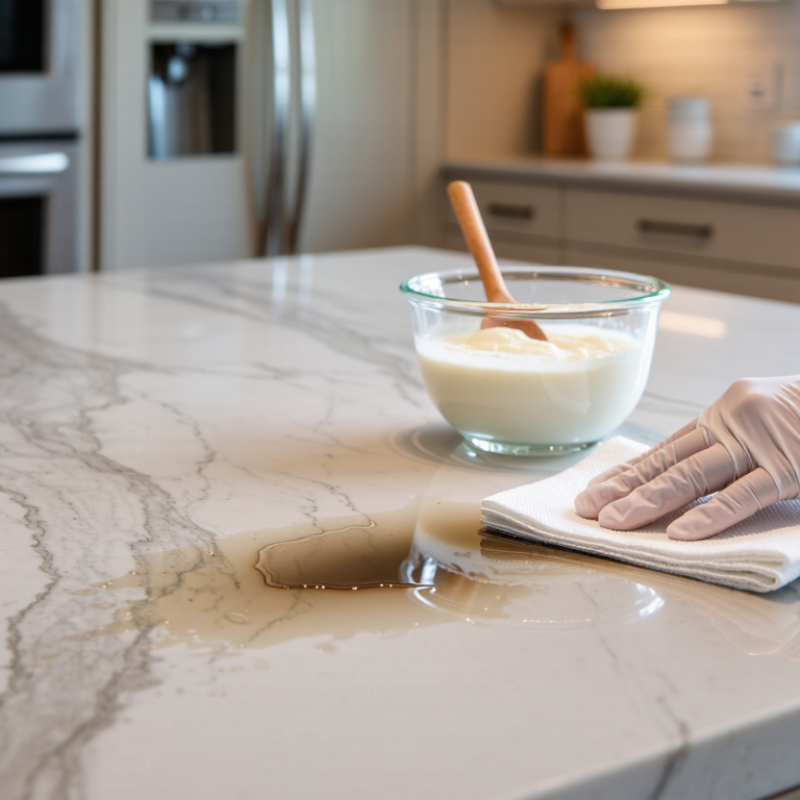
How to Remove Oil Stains from a Marble Kitchen Island?

Identify the Oil Stain and Check the Marble’s Finish

Oil stains on a marble kitchen island often appear as darker, translucent patches. The edges may look uneven, especially near a cooking area. Press a clean, dry white cloth against the spot. A greasy mark may leave a faint oily shadow.

Do not assume every dark patch is oil. Etching usually looks pale, dull, or slightly rough. Scratches can reflect light differently.

Check the marble’s finish before choosing any cleaning method. Polished marble has a glossy surface and clear reflections. Honed marble looks soft and matte. Leathered marble feels gently textured under a fingertip.

Use a flashlight from the side. This can reveal a shallow surface film or a deeper-looking discoloration.

A small water drop may darken porous stone, but this test is not definitive. It mainly shows how the surface reacts to moisture.

Test any cleaner on a hidden edge first. Record the stone’s color, finish, and stain location with a quick photograph.

Dark marble can hide oil until the lighting changes. That is easy to miss. Avoid scraping with metal or rubbing aggressively, since either action may alter the finish.

A poultice may help draw out absorbed oil, but its suitability depends on the stone and sealing condition. The inspection is not foolproof.

If the mark remains after gentle cleaning, a stone-care professional should assess it before stronger treatment.

Gather Safe Materials and Protect the Surrounding Surfaces

How to Remove Oil Stains from a Marble Kitchen Island?

Before touching the stain, gather safe materials. Use soft white cloths, paper towels, a small bowl, and a pH-neutral stone cleaner. Keep clean water nearby for light rinsing. Wear household gloves, especially if your skin is sensitive. Avoid vinegar, lemon juice, powdered abrasives, and harsh bleach. These products can etch or discolor marble.

Protect the surrounding surfaces carefully. Remove nearby appliances, wooden boards, and decorative objects. Cover the floor with a plastic sheet or absorbent towel. Secure the covering with low-tack tape, but do not place tape directly over the marble. I once rushed this step and spread oily residue onto a cabinet edge. The mistake was small, but cleanup took longer. Blot fresh oil with paper towels. Do not rub. Rubbing can push oil deeper into the stone.

Tips: Test the cleaner on a hidden corner first. Wait several minutes and check for dullness or color change. Work from the stain’s outer edge toward its center. Use a separate cloth for each surface. Never mix cleaning products. Marble can look unchanged at first, so inspect it under bright side lighting. If the stain remains, pause before trying stronger methods. A professional stone specialist may need to assess the finish.

How to Remove Oil Stains from a Marble Kitchen Island? - Gather Safe Materials and Protect the Surrounding Surfaces
Material or Protection Step Primary Purpose Recommended Amount or Size Marble-Safe Use Important Precaution
White absorbent towels Blot fresh oil and dry the surface Several clean towels Press gently onto the spill without rubbing Use white, lint-free material to reduce the risk of dye transfer
pH-neutral stone cleaner Remove light surface residue Enough to lightly dampen one cloth Apply to a cloth rather than pouring directly onto the marble Avoid acidic or strongly alkaline cleaners, which can etch or dull marble
Distilled or clean lukewarm water Rinse away cleaner residue A small bowl or spray bottle Dampen a clean cloth and wipe the treated area Do not leave standing water on porous marble
Baking soda Form the absorbent base of a poultice for an oily mark About 1 cup for a small stain Mix with enough water to create a thick, spreadable paste Use a gentle paste; do not scrub because abrasive action may scratch or dull the finish
Plastic scraper or plastic card Lift dried poultice or solid residue One clean, rigid plastic tool Hold it nearly flat and scrape gently Do not use metal blades, steel wool, or abrasive pads
Plastic wrap and painter’s tape Keep a poultice moist while it draws out oil Enough to cover the stained area with an overlap Place plastic wrap over the paste and tape the edges to nearby protection, not directly onto delicate finishes Leave ventilation gaps if recommended by the stone-care instructions
Cardboard or absorbent drop cloth Protect cabinets, flooring, and nearby work areas Large enough to cover the surrounding work zone Place beneath tools and containers before cleaning Keep wet materials from contacting wood, laminate, or electrical fixtures
Disposable gloves Protect hands from prolonged contact with cleaners and oily residue One pair for the cleaning session Wear while preparing, applying, and removing the poultice Follow the safety directions on any cleaning product used
Hidden-area test spot Check compatibility before treating the visible stain A small, inconspicuous section of the same marble Test the cleaner or poultice, then check for dullness, discoloration, or texture change Stop immediately if the finish changes; a stain and an acid etch require different treatment

Absorb Fresh Oil Before It Spreads Deeper

How to Remove Oil Stains from a Marble Kitchen Island?

When oil spills on marble, act before it travels into the stone. I once wiped a small cooking-oil splash across the surface, thinking speed mattered most. The stain spread into a wider, cloudy patch. Blotting is safer than wiping. Press a clean, white paper towel directly onto the oil. Replace it as soon as it looks wet. Continue until the towel lifts almost no residue.

Next, cover the mark with a thick layer of cornstarch or another clean, absorbent powder. Leave it undisturbed for several hours, or overnight for a larger spill. The powder draws oil upward from the marble pores. Remove it gently with a soft, dry cloth. Avoid scrubbing. Scratches can make the area look permanently dull. If the stain remains, repeat the process rather than applying stronger chemicals immediately.

Keep the surface cool and dry. Do not use vinegar, lemon juice, abrasive pads, or harsh degreasers, because acidic and rough products can damage marble’s finish. Test any cleaning method on a hidden edge first. A sealed island usually resists fresh oil better, but sealing does not make marble stain-proof. If the oil has darkened the stone deeply, a professional stone-care specialist may need to apply a controlled poultice. I should have checked the island’s seal earlier. That small delay made the cleanup harder.

Apply and Remove a Marble-Safe Poultice

How to Remove Oil Stains from a Marble Kitchen Island?

Oil can travel below marble’s polished surface, so wiping alone may not work. A marble-safe poultice draws the oil upward through the stone’s pores. Avoid vinegar, lemon juice, bleach, and rough scouring powders. They may worsen the damage.

I use an absorbent poultice powder mixed with a pH-neutral stone cleaner. Follow the product’s instructions carefully. The mixture should resemble thick peanut butter, not soup. Test it on a hidden edge first. Spread a layer about one-quarter inch thick over the stain. Extend slightly beyond its edges. Cover the poultice with plastic film, then tape the perimeter gently. Leave one small corner unsealed. This controls drying while allowing limited airflow.

After 24 to 48 hours, remove the plastic and let the poultice dry completely. Do not rush this part. Once dry, lift it with a plastic scraper and wipe the area using a soft, damp cloth. Never grind dried material into the marble. Let the surface dry before checking the result. Deep stains may need two or three applications. I once removed a poultice too early, and the oil shadow remained clearly visible. That mistake taught me to trust drying time, not impatience. If the mark persists, or the surface looks dull rather than dark, it may be etching instead of staining. A qualified stone professional should inspect it before further treatment.

Clean, Dry, and Protect the Island from Future Stains

Oil stains on marble need patience, not aggressive scrubbing. Wipe fresh oil immediately with a dry microfiber cloth. Press gently; do not spread it. Then clean the surface with warm water and a pH-neutral stone cleaner. Avoid vinegar, lemon, bleach, and abrasive powders. Acids can dull marble’s calcium-carbonate surface. For a dark, older mark, place an absorbent poultice over the stain. Leave it covered until completely dry, often overnight. Remove the powder carefully, then repeat if necessary. One attempt may not be enough.

Drying matters as much as cleaning. Trapped moisture can make the area look darker and hide remaining oil. The Natural Stone Institute’s Dimension Stone Design Manual explains that sealers improve stain resistance but do not make stone stain-proof. ASTM C97/C97M also evaluates stone through water-absorption testing, reported as a percentage by mass. That measurement explains why some marble islands absorb spills faster than others. After cleaning, test the surface with a few water drops. If the drops darken the marble quickly, consider a penetrating sealer recommended for polished marble. Apply it only to completely dry stone, following the product’s coverage and curing instructions. Wipe away residue before it dries. I once assumed a second coat always offered better protection; it left a hazy film instead. Retest after curing. Use cutting boards, trays beneath oil bottles, and coasters near cooking areas. Inspect the island every few months, especially around the sink and cooktop.

How to Remove Oil Stains from a Marble Kitchen Island?

Clean, Dry, and Protect the Island from Future Stains

Start by blotting fresh oil with a soft, absorbent cloth. Clean the surface with warm water and a small amount of pH-neutral dish soap, then rinse with a clean damp cloth and dry immediately. Avoid vinegar, lemon juice, and other acidic cleaners because marble is primarily calcite and can be etched by acids. For persistent stains, use a marble-safe poultice according to its instructions and test it on an inconspicuous area first. Sealing the countertop can help reduce future staining, but it does not make marble completely stain-proof.

FAQS

What should I gather before removing an oil stain from marble?

Use soft white cloths, paper towels, a small bowl, clean water, and a pH-neutral stone cleaner. Wear household gloves if your skin is sensitive. Keep everything within reach.

How should I protect nearby surfaces?

Remove appliances, wooden boards, and decorations from the island. Cover the floor with plastic or an absorbent towel. Secure it with low-tack tape, never directly on the marble. I once skipped this step and spread oil onto a cabinet edge.

What should I do with fresh oil?

Blot it immediately with a dry microfiber cloth or paper towel. Press gently. Do not rub. Rubbing can push oil deeper into the stone.

Which cleaning products should I avoid?

Avoid vinegar, lemon juice, harsh bleach, and powdered abrasives. They may etch, dull, or discolor marble. Never mix cleaning products. That shortcut can create a bigger problem.

How should I apply the cleaner?

Test it on a hidden corner first. Wait several minutes and check for dullness or color changes. Clean from the stain’s outer edge toward its center. Use a separate cloth for each surface.

How can I treat a dark, older oil mark?

Place an absorbent poultice over the stain. Leave it covered until completely dry, often overnight. Remove the material carefully and repeat if needed. One attempt may not be enough.

Why is drying important after cleaning?

Trapped moisture can make marble look darker and hide remaining oil. Allow the island to dry completely before judging the result. Inspect it under bright side lighting. Appearance can be misleading.

How can I reduce future oil stains?

Use cutting boards, trays beneath oil bottles, and coasters near cooking areas. Check the island every few months, especially near the sink and cooktop. A penetrating sealer may improve stain resistance. It does not make marble stain-proof.

How can I tell whether the marble needs sealing?

Place a few water drops on the completely dry surface. If the marble darkens quickly, it may absorb moisture readily. Consider a sealer recommended for polished marble. Follow its coverage and curing instructions carefully.

What should I do if the stain remains?

Pause before trying stronger methods. A stone specialist may need to inspect the finish. Do not keep scrubbing harder. I once assumed extra effort meant better cleaning, but it only increased the risk of dullness.

Conclusion

Learning how to remove oil stains from a marble kitchen island begins with identifying whether the mark is fresh, absorbed, or mixed with other residue. First, inspect the marble’s finish and avoid harsh acids, abrasive powders, or rough tools that may dull or scratch the surface. Gather soft cloths, mild pH-neutral cleaner, absorbent paper, and a marble-safe poultice material. Protect nearby cabinets, flooring, and appliances before starting. For a fresh spill, gently blot the oil without rubbing, helping prevent it from spreading deeper into the stone.

For a stubborn stain, apply the prepared poultice evenly over the affected area and allow it to draw out the oil according to the material’s instructions. Remove it carefully, clean the surface with a suitable neutral solution, and dry the marble completely with a soft towel. If the stain remains, repeat the process rather than using stronger chemicals. Finally, consider applying an appropriate stone sealer and adopt quick-cleaning habits to protect the island from future oil marks.

Madeline

Madeline

Madeline is a dedicated marketing professional with a wealth of expertise in our company's core offerings. With a keen understanding of the industry, she brings a unique perspective to her role, consistently delivering high-quality content that highlights the superior aspects of our products. As......