Can you use vinegar to clean marble (and why you shouldn't) is a question many homeowners ask after noticing fingerprints, water rings, or a cloudy patch on a polished surface. The short answer is no. Vinegar contains acetic acid, which can react with marble’s calcium-carbonate structure. The damage may appear as dull etching rather than a removable stain.
USGS mineral information identifies marble as a carbonate-based dimension stone. That composition explains its vulnerability to acidic products. The Natural Stone Institute also advises avoiding vinegar, lemon juice, and acidic cleaners on calcareous stone. These recommendations matter in real homes. A few drops around a kitchen faucet can leave a pale, irregular mark within minutes. It may feel smooth, yet the polish has already changed.
Stone-care expert Fred Hueston gives the warning plainly: “Acidic cleaners can etch marble.” His practical guidance supports a safer approach: use a pH-neutral stone cleaner, soft microfiber cloths, and clean water. Never scrub harder to correct an acid mark. Pressure cannot restore lost polish.
Even careful owners make this mistake. Vinegar feels natural and inexpensive. That does not make it marble-safe. A stone countertop is not the same as ceramic tile. Before cleaning, identify the stone, test an unseen area, and follow the fabricator’s care instructions. For etched areas, professional honing or polishing may be necessary. The right cleaner protects both appearance and long-term value.
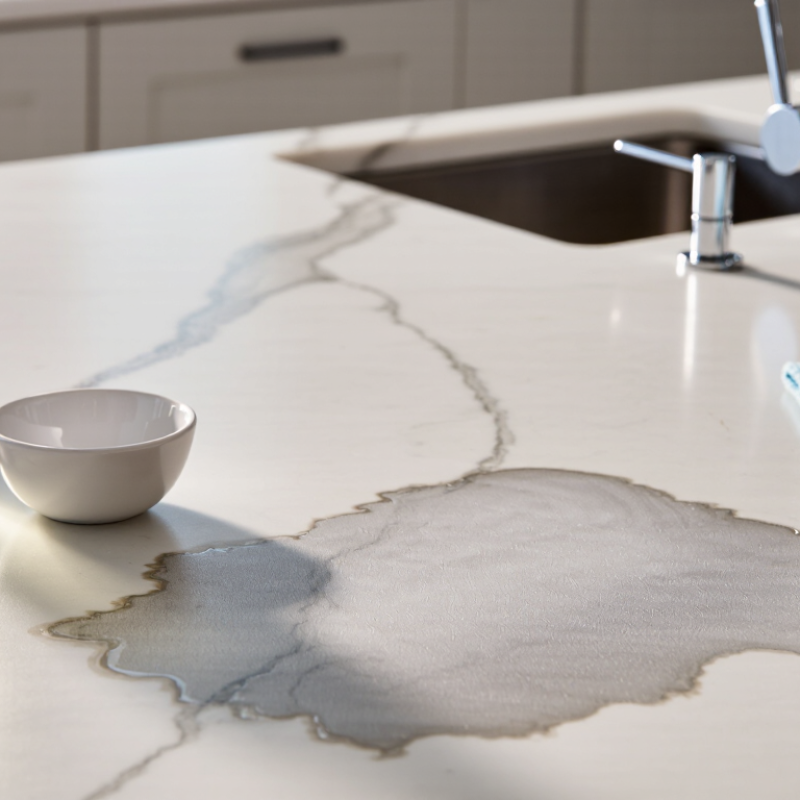
Marble Composition: Calcium Carbonate and Mohs Hardness of 3–5 (USGS)
China Top Marble Care: Can You Use Vinegar to Clean Marble?
Marble is mainly composed of calcium carbonate, usually in the mineral form calcite. The USGS describes calcite with a Mohs hardness of 3. Marble commonly measures about 3–5, depending on its mineral structure. That range matters during daily cleaning. Marble is softer than glass, quartz, and many common grains of sand. A rough cloth can leave tiny scratches.
Vinegar contains acetic acid. When it contacts calcium carbonate, a chemical reaction begins. The surface may lose its polish, develop pale etching, or appear cloudy. The damage can happen within minutes, especially on honed or recently polished marble. It may not look serious at first. Then angled light reveals dull rings around a cup.
I avoid vinegar on marble, even when diluted.
A neutral stone cleaner and warm water are safer choices. Blot spills quickly with a soft microfiber cloth. Do not rub grit across the surface. I once underestimated a small splash near a sink; the mark looked harmless until the stone dried. That mistake still reminds me to test any cleaner on a hidden area. Even a product labeled gentle can behave differently on porous stone.
White Vinegar’s pH of 2.4–3.4 and Its Acid Reaction with Marble
China Top Marble Care: Can You Use Vinegar to Clean Marble?
White vinegar usually has a pH between 2.4 and 3.4, making it strongly acidic. Marble is mainly calcium carbonate, which reacts with acids. When vinegar touches the surface, acetic acid can dissolve tiny amounts of the stone. The damage may appear as a dull patch, cloudy ring, or rough reflection.
The mark is not always dirt.
In practical stone-care inspections, many “water stains” are actually acid etching. A few drops near a lemon, vinegar bottle, or wet cloth may leave a pale circle within minutes. Dark marble can show a faded spot, while polished white marble may lose its sharp shine. The surface can feel slightly different under a dry fingertip.
Avoid pouring vinegar directly onto marble. Do not mix it with abrasive powders or scrub the area aggressively. That approach can enlarge the dull patch and remove more finish. I have seen people mistake etching for grime, then scrub harder. That is an easy mistake to repeat.
For routine cleaning, use warm water and a clean microfiber cloth. For kitchen grease, choose a pH-neutral cleaner labeled for natural stone. Apply it to the cloth, not directly onto the marble, and dry the surface afterward. Test any unfamiliar cleaner on a hidden edge first. If vinegar has already caused a visible dull mark, ordinary washing may not restore the polish. A trained stone professional may need to refinish that section.
China Top Marble Care: Can You Use Vinegar to Clean Marble? — White Vinegar’s pH of 2.4–3.4 and Its Acid Reaction with Marble
Key finding: Vinegar is acidic and is not recommended for routine marble cleaning. Marble is primarily composed of calcium carbonate, which can react with acids and develop dull, light-colored etching.
| Cleaning Substance or Exposure |
Approximate pH |
Potential Effect on Marble |
Recommended Marble-Care Practice |
| White vinegar |
2.4–3.4 |
May dissolve or roughen the calcium-carbonate surface, causing dull spots, loss of gloss, or etching. |
Do not use on polished, honed, or sealed marble as a routine cleaner. |
| Lemon juice |
Approximately 2–2.6 |
Strongly acidic; can create visible etching and discoloration on susceptible marble surfaces. |
Keep away from marble countertops, floors, and decorative surfaces. |
| Carbonated soft drink |
Approximately 2.5–4 |
Acidic liquids may leave dull marks if spilled and allowed to remain on the stone. |
Blot spills promptly, rinse with clean water, and dry with a soft cloth. |
| Clean water |
Approximately 6.5–8.5 |
Generally does not chemically etch marble, although mineral deposits may remain after evaporation. |
Use for wiping and rinsing, followed by drying to reduce water spots. |
| pH-neutral stone cleaner |
Approximately 6–8 |
Designed to remove everyday soil without the acid reaction associated with vinegar and other acidic cleaners. |
Preferred option when used according to the product instructions. |
| Neutral dishwashing solution |
Usually approximately 7–9 |
Usually suitable when highly diluted, but residue can leave a film or streaks. |
Use a small amount in warm water, then rinse and dry thoroughly. |
Why the reaction occurs:
Marble commonly contains calcite, a form of calcium carbonate. Acids provide hydrogen ions that react with calcium carbonate, producing soluble calcium salts, water, and carbon dioxide. A simplified reaction is:
CaCO3 + 2H+ → Ca2+ + H2O + CO2↑
Safe cleaning sequence: Remove loose debris, wipe with a soft microfiber cloth and clean water or a pH-neutral stone cleaner, rinse away residue, and dry the surface. If vinegar has already caused a dull mark, cleaning alone may not restore the finish; professional honing or polishing may be required.
How Acetic Acid Etches Marble: Dull Spots, Roughness, and Discoloration
Vinegar seems gentle, but marble can react badly to its acetic acid. Marble contains calcite, a calcium carbonate mineral. When acid touches it, the surface slowly dissolves. This chemical change is called etching, not ordinary staining.
The damage may appear as dull spots, pale rings, or cloudy patches. Under a window, the polished reflection suddenly looks flat. Run your fingertips across the area. It may feel slightly rough, even after wiping it clean. Darkening or discoloration can also develop when acid exposure leaves an uneven surface that catches dirt and moisture. The result is often more visible on dark or highly polished marble.
I have seen people make this mistake with a quick kitchen wipe. It feels harmless. It is not. A hidden-area test is easy to skip, yet it can prevent a larger repair. For routine care, use clean water and a soft microfiber cloth, or a pH-neutral stone cleaner. Blot spills instead of rubbing them across the slab. If vinegar has already touched the marble, rinse the area with water and dry it promptly. Do not scrub the mark with abrasive powder. That may deepen the uneven texture. Mild etching sometimes needs professional honing or polishing, and home remedies rarely restore the original shine. Be cautious. Surface appearance can improve while the mineral damage remains.
Professional Marble Cleaning: Use pH-Neutral Products Rated Near pH 7 (NSI)
Can You Use Vinegar to Clean Marble?
Vinegar is not a safe routine cleaner for marble. Its acidity can react with the stone’s calcium carbonate surface. The damage may appear as a dull patch, pale ring, or cloudy mark. It is etching, not ordinary dirt. The surface can feel rough after repeated exposure.
Professional marble cleaning should use a pH-neutral product rated near pH 7, following natural-stone care guidance. Check the label carefully. A neutral pH does not guarantee safety if the formula contains abrasives, strong solvents, or unsuitable additives. Choose a non-abrasive cleaner designed for polished or honed stone. Use a soft microfiber cloth. Avoid rough pads.
Small details matter. Remove sand before wiping, because grit can scratch polished marble. Apply the cleaner to the cloth rather than flooding the counter. Rinse away residue, then dry the surface completely. For a new product, test a hidden corner first and inspect it after drying. This step feels slow, but it prevents expensive surprises. Even careful routines can fail when a sealant is worn or the marble has hidden weaknesses. Deep etching usually needs professional restoration, not more household cleaner.
Can You Use Vinegar to Clean Marble?
Marble is calcium-carbonate-based stone and can etch when exposed to acidic cleaners. Professional marble care generally favors pH-neutral products near pH 7.
Vinegar and lemon juice are acidic, so they may dull or etch polished marble. A pH-neutral cleaner is the safer routine choice, while any alkaline or specialty product should be tested according to the surface manufacturer's instructions.
Safe Vinegar-Free Marble Care: Dusting, Blotting, Rinsing, and Sealing (IICRC)
China Top Marble Care: Can You Use Vinegar to Clean Marble?
Vinegar is inexpensive, but marble is not forgiving. Its acetic acid can react with calcite and leave dull, pale etching. The U.S. Geological Survey describes calcite as calcium carbonate, the main mineral in many marbles. A 5% vinegar solution commonly measures near pH 2–3, far below neutral water. Natural Stone Institute care guidance also advises avoiding acidic household cleaners on calcareous stone.
Use a safer routine. Start with a soft microfiber cloth or a clean dust mop. Grit matters. Small sand particles can scratch polished surfaces during wiping. For coffee, oil, or juice, blot immediately with white paper towels. Do not rub outward. Then use a pH-neutral stone cleaner diluted exactly as directed. Rinse with clean water, and dry the surface completely to prevent streaks and residue.
Sealing helps, but it does not make marble acid-proof. IICRC professional cleaning principles emphasize inspection, controlled moisture, rinsing, and surface testing. Test any cleaner on a hidden area first. Wait and inspect under angled light. A sealant may reduce absorption, yet it cannot prevent etching from vinegar, citrus, or wine. In practice, I sometimes see owners over-clean polished marble. That habit can leave more residue than protection. Gentle care is slower, but usually safer.
FAQS
Marble mainly contains calcium carbonate, usually in the mineral form called calcite. Its hardness is commonly about 3–5.
Vinegar contains acetic acid. The acid reacts with calcium carbonate and can dissolve tiny amounts of the surface.
A few drops may create a dull or cloudy patch within minutes. Angled light can reveal faint rings around a cup.
The surface may lose its shine, show a pale circle, or reflect light unevenly. It may feel slightly rough when dry.
No. It may be acid etching rather than surface dirt. Scrubbing harder can enlarge the damaged area.
Dilution does not make vinegar reliably safe for marble. I would avoid it, even when the liquid seems weak.
Use warm water and a soft microfiber cloth. For grease, choose a pH-neutral cleaner made for natural stone.
Blot spills quickly with a clean cloth. Do not rub grit across the surface, because marble scratches more easily than glass.
Yes. Test a small amount on a hidden edge first. Even a gentle-looking cleaner may behave differently on porous stone.
Usually, washing cannot restore lost polish. A trained stone professional may need to refinish that section. I once underestimated a small splash; that was a useful mistake.
Conclusion
Can you use vinegar to clean marble (and why you shouldn't)? In most cases, vinegar is not suitable for marble because marble is primarily composed of calcium carbonate, a mineral with a Mohs hardness of about 3–5. White vinegar is acidic, with a pH commonly ranging from 2.4 to 3.4. When its acetic acid contacts marble, it can react with the surface and gradually dissolve or etch it. This may leave dull spots, rough textures, weakened polish, and uneven discoloration that ordinary wiping cannot remove.
For professional marble cleaning, choose a pH-neutral product with a pH close to 7 and follow the care instructions for the stone. Safe routine maintenance includes dusting with a soft, non-abrasive cloth, blotting spills promptly, rinsing away cleaning residue with clean water, and drying the surface thoroughly. Periodic sealing can also help reduce staining and protect the marble. Avoid acidic household cleaners, abrasive powders, and rough tools to preserve the stone’s natural appearance and finish.
 Zahran Marble
