When considering why marble feels colder than granite or wood, we enter the realm of thermal conductivity. Dr. Emily Carter, a materials scientist, illustrates this by stating, "Marble's ability to absorb heat sets it apart from other surfaces." This highlights a crucial aspect of marble's interaction with the environment.
Marble is a dense stone, known for its aesthetic appeal and unique coolness. Unlike granite and wood, marble retains a lower temperature in warm climates. This quality affects how our skin perceives its surface. The contrast becomes remarkable in summer; marble can feel refreshing while granite and wood seem warmer.
Understanding why marble feels colder than granite or wood reveals much about materials in our homes. It leads us to contemplate personal preferences. While some favor the chill of marble, others appreciate the warmth of wood. This diversity in material choices reflects individual comfort and aesthetic decisions. Recognizing these differences allows us to make more informed choices when designing our living spaces.
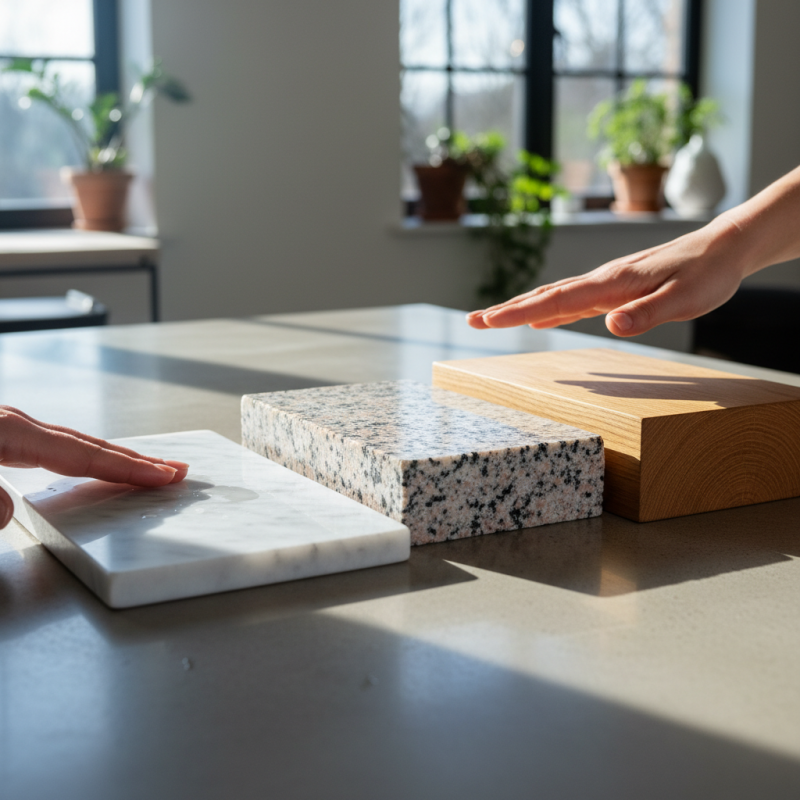
The Thermal Conductivity of Marble Compared to Granite and Wood
Marble, granite, and wood differ greatly in thermal conductivity. When you touch marble, it feels cooler. This sensation stems from marble's higher thermal conductivity compared to wood and granite. Marble efficiently draws heat from your skin, creating a chilly sensation.
Granite, although a natural stone, has a lower thermal conductivity. It retains heat better, making it feel warmer to the touch. Wood is an even poorer conductor, insulating heat very well. This is why you often find wooden surfaces more comfortable in colder months.
The implications of these properties are significant in interior design choices. If your goal is a sleek look and a cool touch, marble is ideal. However, its coldness can be a downside in cozy settings. Consider balancing marble with warmer materials for added comfort. The choice between these materials involves both aesthetic and practical considerations.
Top 10 Reasons Why Marble Feels Colder Than Granite and Wood? - The Thermal Conductivity of Marble Compared to Granite and Wood
| Material |
Thermal Conductivity (W/m·K) |
Density (kg/m³) |
Specific Heat Capacity (kJ/kg·K) |
Feel on Touch |
| Marble |
2.5 - 3.0 |
2,700 |
0.88 |
Cold and smooth |
| Granite |
2.5 - 3.5 |
2,600 |
0.79 |
Cool and textured |
| Wood |
0.1 - 0.2 |
600 - 900 |
1.5 - 2.5 |
Warm and soft |
Influence of Surface Texture on Perceived Temperature of Stones
The texture of a stone significantly affects how we perceive its temperature. Marble often feels colder than granite or wood due to its smooth, polished surface. This smoothness allows marble to conduct heat away from our skin more efficiently. According to a study published in the Journal of Materials Science, polished surfaces can lower a skin’s temperature by as much as 5 degrees Fahrenheit.
Granite, on the other hand, has a slightly rougher texture. This roughness means it retains a bit more heat when touched, creating a warmer feel. Wood surfaces, with their organic texture, tend to insulate rather than conduct. The American Society of Heating, Refrigerating and Air-Conditioning Engineers shows that surfaces like wood can increase thermal resistance by 30% compared to polished stones.
Tips for choosing stone surfaces: When selecting materials for your space, consider how they will feel in different temperatures. A smooth stone might look beautiful but can be uncomfortable during colder months. For kitchens, granite may be a better choice to ensure warmth. Regular maintenance of surfaces will also help retain their texture, affecting how they feel to the touch. Reflect on the intended use of your space and what sensations you want to evoke.
Heat Retention Capabilities of Marble, Granite, and Wood
Marble, granite, and wood differ significantly in their heat retention capabilities. Marble naturally retains heat due to its denser composition. It absorbs, stores, and releases warmth gradually. This quality often makes marble feel colder to the touch compared to granite and wood.
Granite, while also stone, is less porous than marble, allowing it to dissipate heat more quickly. Wood, being a natural insulator, tends to feel warmer overall.
Research by the Stone Alliance indicates that marble has a thermal conductivity of 2.3 W/m·K, while granite has a lower conductivity of 1.4 W/m·K. Wood's thermal conductivity can vary, but it's often around 0.12 W/m·K. The higher thermal conductivity of marble makes it more efficient in retaining cold, hence its colder feel in contrast to wood.
Tip: If you want to mitigate the chilly feeling of marble, consider adding rugs or mats. These can trap warmth and create a cozy atmosphere.
Additionally, be mindful of the potential discomfort that marble flooring can bring in colder climates. Frequent exposure to cold surfaces may lead to issues for some individuals. It may be beneficial to explore various materials for specific environments.
Environmental Factors Affecting Temperature Perception of Stone Surfaces
When it comes to stone surfaces, temperature perception varies widely among materials. Marble often feels colder than granite and wood due to several environmental factors. One significant reason is its thermal conductivity. Marble has a higher thermal conductivity than granite and wood. This means it draws heat away from your body more quickly, giving it that chilling sensation.
The surrounding environment also influences how we feel the temperature of these materials. In a well-ventilated area, marble’s cooling properties become even more pronounced. On a warm day, stepping onto marble can feel refreshing. Conversely, in humid conditions, it may seem excessively cold and unwelcoming. The context matters; a sunny kitchen with wood surfaces may feel much warmer than a cool stone terrace.
Moreover, humidity levels play a role in how we perceive temperature. High humidity can make marble surfaces feel cooler and more uncomfortable. Conversely, granite and wood may retain some warmth, feeling cozy during colder months. Personal experiences and preferences influence our perceptions significantly. While marble may appear appealing for its aesthetic, its environmental interactions can lead to moments of discomfort.
The Role of Specific Heat Capacity in Material Temperature Differences
Marble, granite, and wood each have unique thermal properties. These differences are largely influenced by their specific heat capacity. Specific heat capacity is the amount of energy needed to raise the temperature of a material. Marble has a higher specific heat capacity than both granite and wood. As a result, it can absorb more heat, making it feel colder to the touch.
When you walk on marble, the thermal conductivity plays a key role. Marble easily conducts heat away from your skin. This can cause a chilling sensation compared to granite or wood, which retain warmth longer. In contrast, granite and wood have lower thermal conductivity. They do not draw heat from your body as rapidly, so they feel warmer.
Understanding these properties helps in various applications. In homes, using marble can create a cool, elegant aesthetic. However, the drawback may include discomfort in colder climates. Often, people find themselves evaluating whether the beauty of marble is worth the chill. Ultimately, it’s essential to consider both aesthetic appeal and comfort when choosing materials for flooring or surfaces in your home.
FAQS
: Marble has higher thermal conductivity. It draws heat from your skin more effectively than granite and wood.
Polished surfaces, like marble, feel colder due to efficient heat conduction. Rough textures, like granite, feel warmer.
Marble retains heat well due to its density. Granite dissipates heat quicker, while wood acts as a good insulator.
Yes, marble can feel chilly. Balancing it with warmer materials can enhance comfort in living spaces.
Adding rugs or mats can trap warmth. This creates a cozier atmosphere, especially in colder environments.
Absolutely. Consider how materials will feel in various temperatures. Aesthetics and comfort should both be prioritized.
Proper maintenance retains texture. This impacts how surfaces feel to the touch, influencing overall comfort.
Yes, wood insulates well and feels warmer than stone. It often provides a more comfortable surface in winter.
Marble's natural coldness can detract from a warm, inviting atmosphere. This might need careful design consideration.
It may cause discomfort for some individuals, particularly in colder climates. Exploring alternatives might be wise.
Conclusion
Marble often feels colder than granite or wood due to several scientific factors. Primarily, the thermal conductivity of marble is higher than that of granite and wood, allowing it to draw heat away from the skin more effectively, which is why does marble feel colder than granite or wood. Additionally, the surface texture of marble can influence thermal perception. Smoother surfaces tend to feel cooler because they present a more direct contact area compared to rougher materials.
Furthermore, marble's heat retention capabilities also play a role in its temperature sensation; it cools down rapidly in cooler environments, enhancing the perception of coldness. Environmental factors, such as ambient temperature and humidity, contribute to how the surface temperature of stone feels as well. Lastly, the specific heat capacity of each material affects how quickly they heat up or cool down, reinforcing the notion that marble will feel colder in most instances compared to granite or wood.
 Zahran Marble
