 Zahran Marble
Zahran Marble
Zahran Marble
Red wine and light marble create a difficult cleaning problem. The spill looks dramatic almost immediately. Its deep pigments can settle into the stone’s tiny pores, especially when the surface lacks effective sealing. Wine also contains acids and tannins, which may weaken the polished finish or leave a dull mark. Marble is beautiful, but it is not naturally stain-proof.
The response must be quick and gentle. Blot the spill with a clean, white cloth instead of rubbing it across the surface. Rubbing can spread pigment and push it deeper. Then use a small amount of pH-neutral stone cleaner with lukewarm water. Avoid vinegar, lemon juice, bleach, powdered abrasives, and rough scouring pads. They may create etching, discoloration, or new surface damage while appearing to clean the stain.
This guide explores How to prevent red wine stains on light marble through practical care, suitable sealing, and sensible household habits. A quality penetrating sealer can reduce absorption, but it cannot make marble completely impervious. Sealing performance also depends on the stone’s condition and the product used. No method is perfect.
For stubborn marks, a professional stone-care technician should assess the marble before stronger treatment begins. A poultice may help draw out embedded pigment, but incorrect application can worsen the finish. Test any cleaner in a hidden area first. That small step is easy to skip, and skipping it can be costly. Even careful advice has limits, because marble varies in porosity, polish, age, and previous treatment.
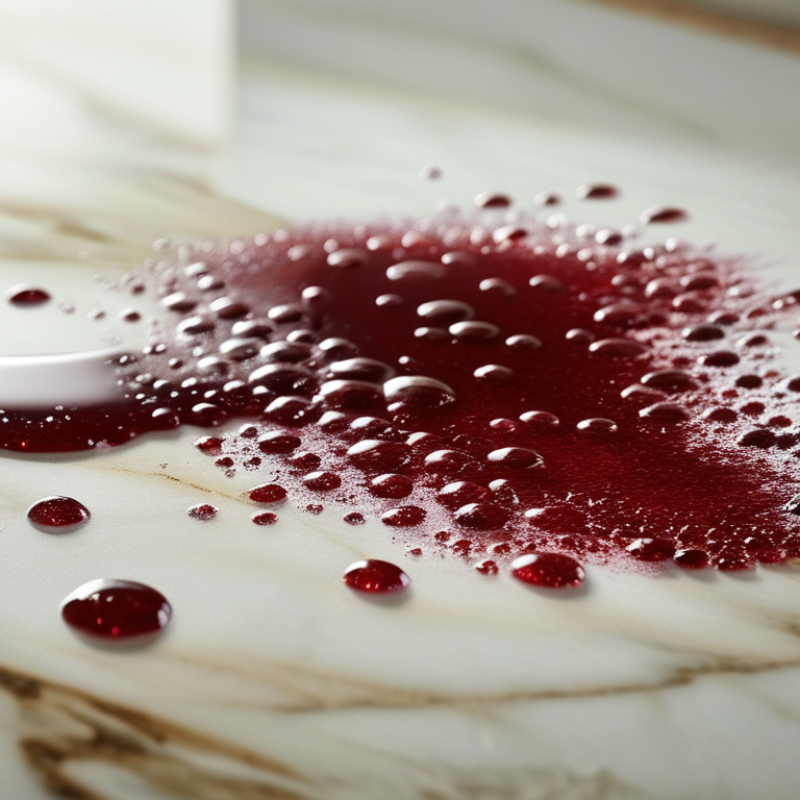
Light marble is vulnerable to red wine because its chemistry and surface structure invite staining. The Natural Stone Institute identifies marble as a calcite-rich stone that reacts with acids. Oregon State University wine guidance places typical wine pH near 3.0–4.0. That acidity can slowly weaken the polished surface, especially when wine remains untouched.
Marble also contains microscopic pores and mineral boundaries. Red wine’s water carries anthocyanins and tannins into those pathways. A pale surface makes the contrast obvious. Honed marble often shows marks faster than highly polished marble, although polishing does not make stone waterproof. ASTM C97 absorption testing is commonly used to evaluate natural stone performance, but test results vary by quarry and slab. A sealer helps, not forever. It can reduce absorption, yet it cannot stop a deep spill from becoming a shadow.
Wipe red wine immediately with a soft, absorbent cloth. Do not scrub in circles. Blot outward from the spill, then rinse with clean water and dry the area. Use a pH-neutral stone cleaner, never vinegar, citrus juice, or abrasive powder. The Natural Stone Institute recommends regular resealing based on use and absorption, not an arbitrary calendar. A small water-drop test can reveal whether the surface still repels moisture. It is useful, but imperfect. Sealer claims are sometimes too confident. On valuable marble, test any cleaner in a hidden corner first.
: Marble has microscopic pores and hairline openings. Wine pigments enter these spaces through capillary action. Dark colors remain visible.
Treat it immediately. Even ten minutes may leave a pale pink shadow. Longer exposure usually allows deeper absorption.
Blot gently with a clean, absorbent cloth. Do not scrub. Keep a towel nearby for quick response.
Usually, no. Rubbing can spread pigments across polished areas. Pressure may push liquid farther into the stone.
Use a pH-neutral cleaner made for natural stone. Dry the area completely after cleaning. Avoid acidic products.
Their acidity can react with marble’s calcium carbonate structure. This may dull or etch the polished surface. The finish can suffer.
No treatment protects marble forever. A suitable penetrating sealer can reduce absorption, but marble is not stain-proof.
Place a few water drops on a hidden area. If water no longer beads, maintenance may be needed. Test carefully.
A professional may use a poultice to draw pigments outward. Results vary with age, finish, and previous treatments.
Do not wait until morning. I once did, and polishing became necessary. Quick care works better, though it is not perfect.
Light marble is especially vulnerable to red wine because its pale color makes even small discolorations highly visible, while its porous structure can absorb liquid. Red wine contains deeply colored pigments, natural acids, and moisture that may enter tiny pores, micro-cracks, or unsealed areas. The longer the spill remains, the deeper it can travel and the more difficult it becomes to remove. Stain depth and appearance are influenced by the marble’s porosity, surface finish, sealant condition, wine acidity, spill size, and exposure time.
To clean a fresh spill safely, blot it gently with a soft, absorbent cloth instead of wiping, which can spread the pigment. Then use a mild, pH-neutral cleaner diluted with water, rinse carefully, and dry the surface completely. Avoid harsh acids, abrasive powders, and aggressive scrubbing. How to prevent red wine stains on light marble depends on consistent protection: apply a suitable stone sealer, wipe spills immediately, use coasters and trays, and clean regularly with non-acidic products. Periodic resealing can also help maintain resistance and preserve the marble’s appearance.
