Zahran Marble
When it comes to maintaining the elegance of marble surfaces, caution is essential. Many homeowners wonder, "Can you use vinegar to clean marble (and why you shouldn't)?" According to expert stone care specialist, Dr. James O'Hara, “Vinegar is far too acidic for marble; it can cause irreversible damage.” Marble is a porous stone, which means it can absorb liquids, including acidic cleaning agents.
Using vinegar can lead to etching and discoloration. It strips away the stone's natural shine and creates dull patches. Such damage often requires professional restoration, which can be costly and time-consuming. This is a common mistake for those unaware of marble’s delicate nature.
In a quest for clean surfaces, it's easy to overlook the unique properties of marble. Instead of vinegar, consider using pH-balanced cleaners. This approach ensures your marble remains beautiful and intact over time. Remember, the right care not only enhances the beauty but also preserves the value of your investment.
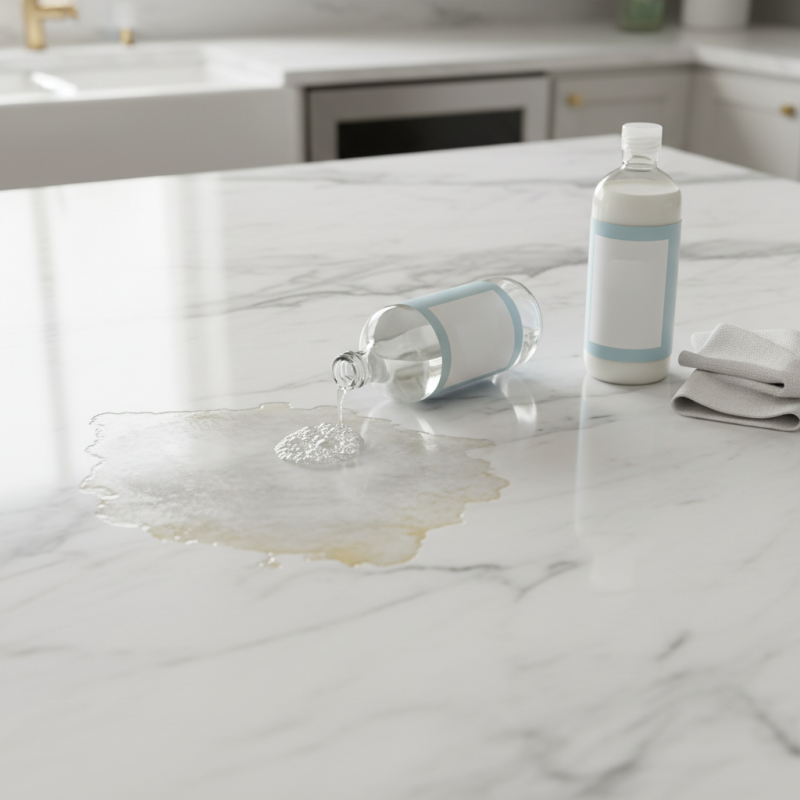
Vinegar is often touted as a natural cleaning solution, but its chemical makeup can be detrimental to marble surfaces. Marble primarily consists of calcite, a form of calcium carbonate. When an acidic substance like vinegar interacts with calcite, it triggers a chemical reaction that can etch and damage the marble.
Studies show that acids can decrease the surface pH, leading to increased vulnerability to stains and scratches.
The pH of vinegar typically hovers around 2 to 3. In contrast, marble has a neutral pH of approximately 7. This stark difference means that even a small amount of vinegar can create a hostile environment for marble. A report from the Marble Institute of America indicates that even short exposure to acidic cleaners can result in permanent damage to marble surfaces.
Using vinegar on marble is a common mistake. Many people do not recognize that this seemingly harmless solution can have lasting consequences. The effect may not be instantly visible, but over time, the etching becomes apparent as a dullness or discoloration. Maintaining the integrity of marble requires understanding its vulnerability to acidic substances. This knowledge is crucial for preserving beautiful marble surfaces.
Vinegar is a common household item, but it shouldn't be used on marble surfaces. Its acidity is harmful. Marble is made of calcium carbonate, which reacts poorly to acidic substances. When vinegar comes into contact with marble, it can lead to etching, dulling the surface. This reaction alters the marble's natural beauty. It doesn’t just leave stains; it actually damages the stone itself.
Many people may not realize this until it's too late. A small splash can cause a noticeable mark. Over time, repeated exposure to vinegar weakens the marble. The once shiny surface becomes rough and cloudy. Professionals often recommend safer cleaning alternatives. Mild soap and water can effectively clean marble without harming it.
The risk of using vinegar far outweighs any potential benefits. Caring for marble requires understanding its properties. It is a beautiful material that deserves proper maintenance. Consider the long-term effects of your cleaning choices. Keeping marble surfaces beautiful requires caution and care. Always choose methods that respect this elegant stone.
Using vinegar on marble can lead to significant damage. The high acidity in vinegar can etch the surface of marble, dulling its shine. Over time, repeated use can result in pitting and permanent discoloration. This transformation affects both aesthetics and value. Many homeowners may not realize that even a small spill can have lasting consequences.
If you spill vinegar on marble, act quickly. Rinse the area with water immediately. Dry it with a soft cloth to prevent further damage. Regular cleaning with a pH-neutral cleaner is safer. For routine maintenance, consider sealing your marble surfaces. A sealant will help protect against acidic substances.
It’s essential to understand the effects of cleaning products. Not all household items are safe for every surface. Research or consult experts if unsure. Your marble deserves care that preserves its beauty. Simple actions can save your investment from irreversible harm.
Cleaning marble surfaces requires special care. Using vinegar can lead to irreversible damage. Luckily, there are safe alternatives to keep your marble looking pristine.
One excellent method is using warm water mixed with a few drops of dish soap. This solution is gentle yet effective. Wipe down your marble surfaces with a soft cloth. Always dry immediately to prevent water spots.
For tougher stains, consider a paste made from baking soda and water. Apply it to the stained area and let it sit for a few minutes. Scrub gently with a soft sponge. Remember to rinse thoroughly afterwards.
Tips: Always test any cleaner on a small, hidden area first. Avoid any acidic substances, as they can etch the marble. Regular sealing of your marble can also help maintain its beauty and longevity.
| Reason | Description | Alternative Cleaner |
|---|---|---|
| 1. Acidic Nature | Vinegar's acidity can etch and dull the surface of marble. | pH-neutral stone cleaner |
| 2. Long-term Damage | Frequent use can lead to permanent damage and discoloration. | Mild dish soap with water |
| 3. Dulling Finish | Vinegar can strip the sheen and shine of polished marble. | Microfiber cloth with warm water |
| 4. Risk of Stains | Vinegar can cause staining on marble surfaces. | Baking soda paste |
| 5. Harmful Reactions | Combining vinegar with other cleaners can produce harmful fumes. | Castile soap |
| 6. Maintains Value | Preserving marble’s condition is key for property value. | Natural stone cleaner |
| 7. Environmental Impact | Vinegar can contribute to environmental harm when misused. | Eco-friendly cleaning solutions |
| 8. Residue Build-Up | Vinegar can leave behind a sticky residue on stone. | Plain water rinse |
| 9. Inconsistent Results | Results can vary depending on marble type and finish. | Stone wax for shine |
| 10. Poor Cleaning Scent | Vinegar has a strong smell that can linger unpleasantly. | Essential oil-infused cleaners |
Using vinegar on marble can lead to severe long-term consequences. Marble is a natural stone, and its surface is sensitive to acidic substances. When vinegar is applied, it can cause etching, which creates dull spots and a rough texture. Over time, these imperfections accumulate, ruining the aesthetic appeal of your marble decor.
It's not just the surface that suffers. The structural integrity of marble can weaken due to vinegar. Constant exposure may cause microscale fractures, which can expand over time. This makes your marble more susceptible to stains and other damage. Many homeowners don't realize these changes until it's too late, leading to costly repairs or replacements.
Caring for marble requires knowledge and attention. The implications of using vinegar highlight the importance of proper cleaning methods. It’s essential to adopt stone-friendly solutions that maintain your marble's shine and durability. Reflecting on past cleaning methods can help prevent future damage. The beauty of marble is worth the careful effort.
: Vinegar is acidic. It reacts with calcite, the main component of marble, causing etching and damage.
Exposure leads to dullness and discoloration over time. The surface becomes rough and less appealing.
Yes, it can create microscale fractures. These can expand, making the marble more prone to damage.
Damage may not be immediate. Over time, the effects become noticeable as dull spots or rough textures.
Vinegar has a pH of 2-3, while marble is around 7. This difference causes problems for marble when cleaned with vinegar.
Yes, use stone-friendly cleaners. They help maintain the shine and integrity of marble surfaces.
Educate yourself about cleaning products. Reflect on past choices and make informed decisions to protect marble.
You may need professional restoration. Reflect on your cleaning habits to avoid future issues.
Yes, many mistakenly think it's safe. It’s important to be aware of the potential risks.
When considering the question, "Can you use vinegar to clean marble (and why you shouldn't)," it's crucial to understand the chemical composition of both vinegar and marble. The high acidity of vinegar poses a significant risk to marble surfaces, which are primarily composed of calcium carbonate. This acidity can lead to etching and dulling of the marble, resulting in permanent damage over time. Common issues caused by vinegar include discoloration, scratches, and loss of the stone's natural luster.
Instead of vinegar, there are several safer alternatives available for cleaning marble that can effectively maintain its beauty without risking damage. It's essential to use pH-neutral cleaners specifically designed for marble surfaces. Ignoring these recommendations could lead to long-term consequences for your marble decor, including costly repairs and diminished aesthetic appeal. Thus, avoiding vinegar as a cleaning agent is crucial for the preservation of marble surfaces.
