Zahran Marble Zahran Marble

How to Use Marble as a Living Material in Design?

Time:2026-11-23 Author:Amelia
0%

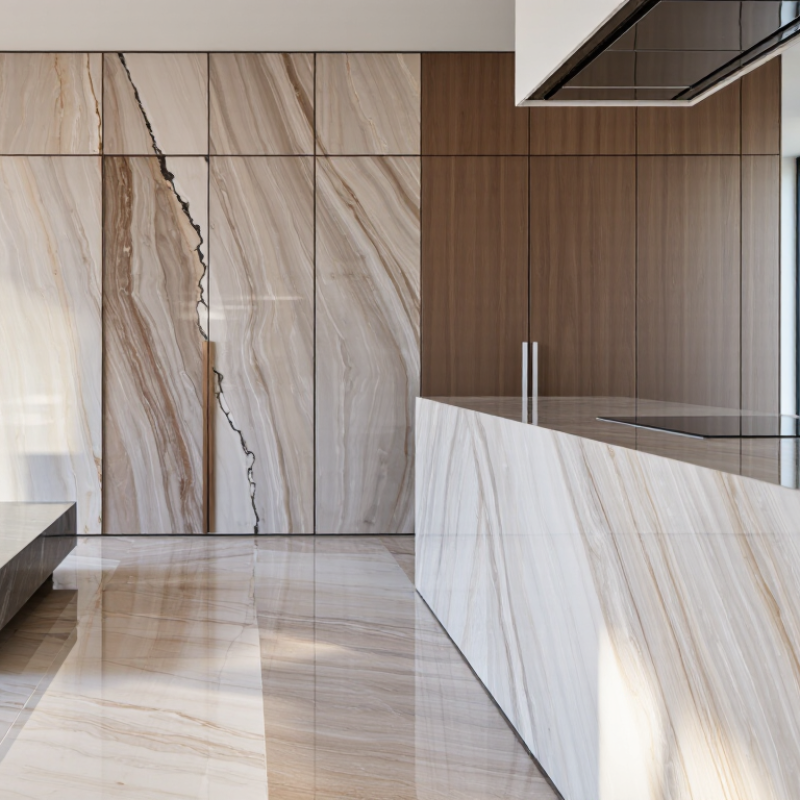
Why is marble considered a "living" material in design? Because it never behaves like a perfectly uniform surface. Veins shift across a slab; small mineral changes catch the light differently from one corner to another. A honed tabletop feels soft and quiet, while a polished edge reflects a window like still water. These details make each piece specific to its quarry and cut. They also make planning important. Designers should review full slabs, not rely only on small samples.

Michelangelo, the Renaissance sculptor, is often credited with saying, “I saw the angel in the marble and carved until I set him free.” The attribution is not firmly documented, but the line captures a useful design idea: marble brings its own character, and skilled work responds to it rather than hiding it. In interiors, that may mean aligning veining across a wall, letting a fissure guide a cut, or accepting that two slabs will not match exactly.

Living does not mean indestructible. Marble can stain, etch, and change with use. A pale kitchen island may show a lemon ring; a busy entry floor may develop a softer sheen over time. That is part of its appeal—and a real design constraint. Thoughtful detailing, clear care guidance, and honest material selection help marble age with dignity. Sometimes the result is imperfect. That can be the point.
How to Use Marble as a Living Material in Design?

Define Marble by Its Calcite Structure, Veining, and Typical 3–5 Mohs Hardness

Marble is a metamorphic rock composed mainly of recrystallized calcite, sometimes with dolomite. The U.S. Geological Survey’s mineral references place calcite at Mohs 3. Commercial marble is commonly described around 3–5, reflecting differences in mineral mix and texture. That scale measures scratch resistance, not toughness. A dropped pan can still chip an edge.

Its veining records mineral impurities and fractures altered during formation. Gray threads, rust-colored patches, and cloudy bands are not printed patterns; they vary from slab to slab. Natural Stone Institute guidance treats stone selection as a performance decision, while ASTM C503/C503M assesses marble through properties such as absorption, density, and strength. These tests help designers compare samples, but they do not make every slab behave alike.

Veins are clues.

In a kitchen, a lemon left on a honed surface may dull the finish because calcite reacts with acids. The typical hardness range also means sand can scratch marble under repeated foot traffic. I would specify a finish, maintenance plan, and sample review for the actual use—not rely on a showroom chip. The Mohs number is useful, but a little incomplete. Marble keeps changing with light, wear, and care.

Select Slabs Using ASTM C97 Absorption and Bulk-Specific-Gravity Tests

Marble behaves like a living material: its pores take in water, while mineral veins create local differences. ASTM C97/C97M measures water absorption and bulk specific gravity, giving designers comparable values for individual stone samples. The Natural Stone Institute’s Dimension Stone Design Manual reports broad property ranges for marble, but no single “marble” figure can predict every slab. Test the actual lot.

Read absorption as a percentage of dry weight. A higher result can signal greater moisture uptake, which matters near sinks, showers, and exterior joints. Bulk specific gravity helps compare density between samples; it is not a stain-resistance score. Ask for an independent laboratory report identifying the quarry source, sample, test method, and result. Small details matter.

Compare candidate slabs side by side. A vein crossing a cut edge may absorb differently from the surrounding field, so request samples that reflect the finished layout. ASTM C97 results guide selection; they do not guarantee performance under every installation condition. Allow for sealers, workmanship, and exposure. I would not choose from a brochure average alone. Check the numbers against the surface you will actually live with.

How to Use Marble as a Living Material in Design

Compare Slabs with ASTM C97 Absorption and Bulk-Specific-Gravity Tests

The chart shows illustrative readings for four marble slabs: water absorption by mass and bulk specific gravity. These values are examples, not laboratory results or acceptance limits. ASTM C97/C97M describes how to measure these properties; compare actual test reports for the slabs under consideration. Absorption and specific gravity can inform material selection, but should be considered alongside finish, intended use, and maintenance needs.

Plan Cuts Around Veins and Bookmatch Layouts to Limit Offcuts

Treat every marble slab as a one-off drawing, not a uniform sheet. Photograph and number slabs before cutting. Mark prominent veins, color shifts, fissures, and usable edges on a full-size layout. For bookmatched panels, open adjacent slabs like pages and align their veins before fixing dimensions. A few centimeters of adjustment can preserve a striking pattern and avoid narrow, unusable strips. Veins lead. But they do not reveal every hidden flaw.

Plan templates for the entire project, including returns, thresholds, and small pieces. Nest cuts around the slab’s natural movement, while allowing for blade kerf and edge trimming. The U.S. EPA’s 2018 construction and demolition materials report estimated 600 million tons of such debris generated in the United States; about 90 percent came from demolition. This is not a marble-specific figure, but it shows why material planning matters. Record offcuts that remain sound, then assign them to shelves, samples, or future repairs. A perfect layout can still fail when a vein breaks during fabrication. Leave a practical margin, and review the final cut map with the fabricator before work begins.

How to Use Marble as a Living Material in Design? - Plan Cuts Around Veins and Bookmatch Layouts to Limit Offcuts

Illustrative cutting plans based on a nominal 3000 × 1600 mm slab (4.80 m²). Actual usable area depends on the slab’s dimensions, edge condition, fissures, and vein pattern; confirm each layout against the selected slab before cutting.

Design application Cut pieces and dimensions Vein and layout strategy Approx. stone area used Planning note to limit offcuts
Bookmatched island waterfall panels 2 panels, each 2400 × 750 mm; one panel from each of two adjacent slabs Select consecutive slabs and mirror their cut orientation so the veining opens outward from the center seam. 1.80 m² per panel; 3.60 m² total across two slabs Align the main vein before templating. Each slab has about 3.00 m² of nominal area outside the panel footprint, before kerf, defects, and trimming.
Kitchen worktop with continuous vein flow 2 runs, each 2400 × 650 mm Place both runs in the same direction along the slab where possible; keep the dominant vein flowing consistently across the room. 3.12 m² total A nominal slab has 4.80 m² of area, leaving about 1.68 m² before allowances. Reserve suitable long strips for upstands or smaller returns.
Vanity top and matching splash Top: 1800 × 600 mm; splash: 1800 × 100 mm Cut the splash from a strip beside the top and keep both pieces in the same orientation for visual continuity. 1.26 m² total Plan the basin cutout after mapping the veins. The remaining slab area may suit thresholds, shelves, or a second small component if dimensions and quality allow.
Fireplace surround with mirrored sides 2 side panels, each 1200 × 300 mm; 1 header, 1500 × 300 mm Pair the side panels as a bookmatch where the vein permits; choose the header position to relate to the central pattern. 1.26 m² total The narrow panel widths can often be nested beside larger cuts. Check that the proposed mirrored pieces come from compatible areas of the slab.
Full-height feature wall 2 panels, each 1500 × 1200 mm Dry-lay the panels in sequence and mark the vein path before cutting; bookmatch only if the pattern and slab sequence support a balanced join. 3.60 m² total Two panels require at least 3.60 m² of nominal stone area. Review slab dimensions and usable zones carefully, since edge trimming and defects can affect feasibility.
Small accessories from remnants Example: 2 shelves, each 500 × 150 mm, plus a 300 × 300 mm tray blank Choose offcuts with intact edges and patterns that work at a smaller scale; keep the vein direction consistent within paired pieces. 0.24 m² total Label and store useful remnants by dimensions and vein orientation. Suitability depends on crack-free area, thickness, and required edge finishing.

Practical check: Treat the slab as a unique pattern, not a uniform sheet. Photograph and mark the vein direction, defects, intended joins, finished edges, and cutout positions on a full-scale cutting plan before fabrication.

Specify Marble for Its Use Under ASTM C503 Dimension-Stone Requirements

Marble is not visually static. Veins shift across a slab, and mineral structure can affect how it performs. Specify it as dimension stone under the current ASTM C503 requirements, not by appearance alone. The standard gives a framework for evaluating marble and its physical properties. Check the specified stone type and applicable test results before approval.

Request test data tied to the actual quarry source and intended application. ASTM methods assess properties such as water absorption, compressive strength, and flexural strength. A polished sample may look uniform, while a larger slab reveals fissures or open veining. Review representative samples, finish, thickness, and fabrication details together. Small differences matter.

C503 compliance does not replace project-specific design. Consider exposure to moisture, freeze-thaw cycles, anchorage, and expected loads with qualified project professionals. Set acceptance criteria in the specification, and confirm they match the current standard edition. I would not treat a single test report as a promise that every slab will behave identically. Stone varies. That variability is part of its character, but it deserves careful documentation.

Maintain Its Living Patina with pH-Neutral Cleaning and Regular Inspections

Marble changes with use. A faint dull ring beside a glass, or a softened edge on a stair, can become part of its patina.

The goal is not to freeze the surface, but to prevent avoidable damage. The USGS Water Science School identifies pH 7 as neutral; choose a stone-safe cleaner near that point. The Natural Stone Institute’s stone-care guidance also favors neutral cleaners and soft cloths.

Blot spills promptly, especially citrus juice, vinegar, and wine. Blot, don’t scrub. Abrasive pads can leave scratches that catch the light.

Use a damp microfiber cloth, then dry the stone so water does not linger around faucets or seams. Check those areas regularly for loose sealant, darkened grout, or new chips.

A flashlight held low across the surface can reveal etching that overhead lighting hides. Keep a simple dated note or photo; it helps distinguish gradual wear from a sudden change.

Sealing may reduce absorption, but it cannot prevent acid etching, as the Natural Stone Institute’s technical guidance makes clear. A perfect, unchanged surface is not always the right aim.

Still, I would not romanticize every stain: some marks are damage, and early inspection can keep a small repair from spreading.

FAQS

How can I reduce marble offcuts during cutting?

Photograph and number each slab before cutting. Mark veins, fissures, color shifts, and usable edges. Plan all pieces together, including thresholds and returns.

What is bookmatching, and how should I plan it?

Bookmatching places adjacent slabs like open pages, aligning their veins. Review the full layout before setting dimensions. A small adjustment can save a narrow strip.

Can leftover marble pieces still be useful?

Yes. Record sound offcuts and consider them for shelves, samples, or future repairs. Keep in mind, a hidden flaw may still appear during fabrication.

What should I check when specifying marble?

Review applicable dimension-stone requirements and test results for the actual stone source. Check absorption, strength, finish, and thickness together.

Does a test report guarantee every slab will perform the same?

No. Marble varies. A report helps assess the stone, but individual slabs may contain different veins or fissures.

How should I choose marble for a specific location?

Consider moisture, freezing conditions, anchorage, and expected loads. Ask qualified project professionals to review the application and set clear acceptance criteria.

What is a gentle way to clean marble?

Use a pH-neutral, stone-safe cleaner and a soft microfiber cloth. Blot spills promptly, especially citrus juice, vinegar, and wine. Blot, don’t scrub.

How can I spot marble damage early?

Dry the surface after cleaning and inspect faucets, seams, grout, and edges. A low-held flashlight can reveal dull etching. Take dated photos; they help, though I sometimes forget.

Conclusion

Why is marble considered a "living" material in design? Its calcite structure, natural veining, and subtle variations give each slab a distinct character that can evolve with use. With a typical hardness of 3–5 on the Mohs scale, marble is beautiful but relatively soft, so choosing the right slab and application matters. ASTM C97 absorption and bulk-specific-gravity tests can help assess a slab’s properties, while ASTM C503 provides requirements for marble used as dimension stone.

Thoughtful planning can make the most of each slab: arrange cuts around the veins, consider bookmatched layouts, and adjust the design to reduce offcuts. After installation, preserve marble’s natural patina with pH-neutral cleaning and regular inspections. Rather than treating every mark as a flaw, consider how gradual changes contribute to the material’s character while maintaining its surface with consistent, gentle care.

Amelia

Amelia

Amelia is a seasoned marketing professional with a wealth of expertise in our company’s core offerings. With an unwavering passion for driving growth and innovation, she plays a pivotal role in shaping our marketing strategies and enhancing brand visibility. A key aspect of her responsibilities......