 Zahran Marble
Zahran Marble
Zahran Marble
Marble adds elegance to kitchens, fireplaces, bathrooms, and outdoor counters. Yet its beauty can change quickly near intense or uneven heat. A dark ring, fine line, or sudden chip may appear around a stove, hot pan, heating vent, or fireplace. These defects often seem mysterious, but marble reacts to temperature, moisture, pressure, and installation conditions.
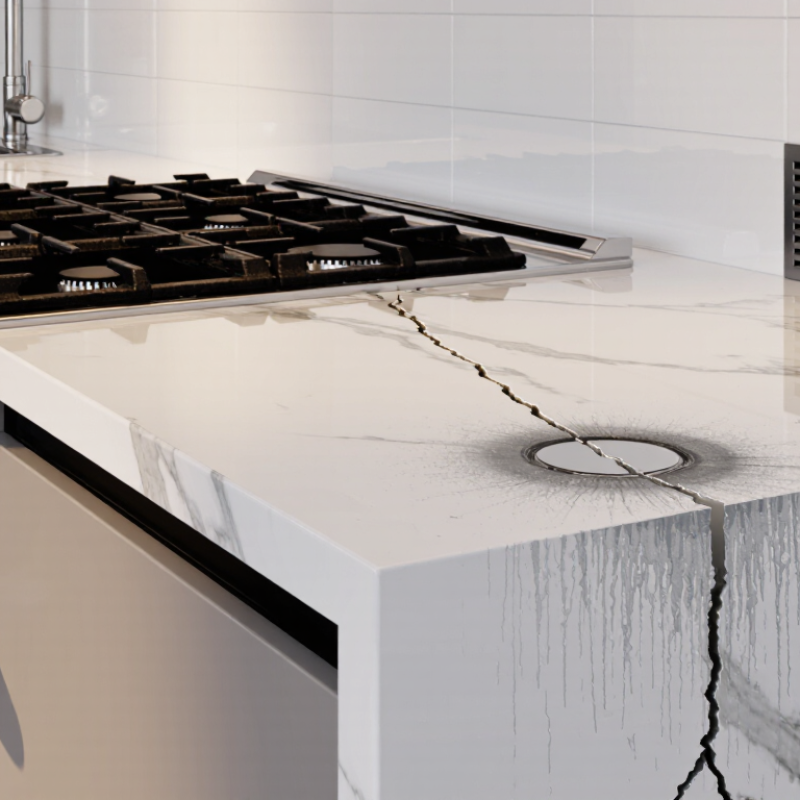
So, why does marble crack near heat sources like stoves? The answer usually involves thermal expansion and contraction. When one area becomes hot, it expands faster than the surrounding stone. Later, rapid cooling creates stress within the marble. Repeated heating can worsen tiny weaknesses that were invisible during installation. Natural veins, small pores, previous repairs, and thin slabs may increase the risk. Heat alone is not always the only cause.
Installation quality matters greatly. An unsupported overhang, tight joint, weak adhesive, or missing expansion space can trap stress. A heavy pan placed on a cool surface may create a sharp temperature shock. Moisture inside porous marble can also contribute, especially when temperatures change repeatedly. This guide examines the top ten reasons marble cracks near heat sources and explains what homeowners, designers, and installers should inspect. The evidence may not point to one cause. Real damage often results from several small problems working together. That detail is easy to overlook. Careful diagnosis is essential before attempting repairs, replacing the slab, or blaming the stone itself.
Marble’s Thermal Expansion: Approximately 5–8 × 10⁻⁶/°C
Marble expands when heated, even though the movement seems microscopic. A coefficient of 5–8 × 10⁻⁶/°C means one metre of marble may grow 0.5–0.8 millimetres after a 100°C temperature rise. European standard EN 14581 measures this property in natural stone. The figure is useful, but not universal. Mineral composition and moisture can change the result.
Cracking usually begins when expansion has nowhere to go. A marble hearth pressed tightly against a fireplace can develop stress at its edges. Repeated heating and cooling then enlarges tiny flaws. The surface may feel warm, while the underside stays cool. That temperature difference creates a thermal gradient across the slab. Thin marble responds quickly. Thick marble responds unevenly.
Field inspections often reveal more than heat alone. Poor bedding, rigid mortar, sharp cut-outs, and unsupported corners can concentrate stress. A dark stone beside a bright flame may heat faster than adjacent material. Natural Stone Institute technical guidance recommends allowing movement and supporting stone continuously. I would still avoid treating the 5–8 × 10⁻⁶/°C value as a guarantee. Test data describe a specimen, not every installed slab. Leave appropriate movement space, reduce abrupt temperature changes, and inspect existing hairline cracks before installation. Small details matter.
| No. | Cracking Cause | Relevant Physical Data | How It Produces Cracks | Recommended Control |
|---|---|---|---|---|
| 1 | Uneven Thermal Expansion | Marble linear thermal expansion: approximately 5–8 × 10⁻⁶/°C | The surface directly facing a heater expands before the cooler surrounding marble, creating tensile stress between hot and cold zones. | Maintain uniform heat distribution and avoid concentrating heat on a small section of the slab. |
| 2 | Rapid Temperature Change | Temperature changes of approximately 30–50°C or more can create significant thermal gradients, depending on slab thickness and heating rate. | Fast heating or cooling does not allow the entire slab to expand or contract evenly, increasing thermal-shock stress. | Raise and lower temperatures gradually; do not spray cold water on heated marble. |
| 3 | Localized Hot Spots | Direct contact temperatures can be substantially higher than the average room or wall temperature. | A small hot area expands against cooler marble around it, producing concentrated stress and possible radial cracks. | Use a heat shield, ventilated air gap, or insulating pad between the marble and the heat source. |
| 4 | Repeated Heating and Cooling Cycles | Daily or frequent thermal cycling repeatedly reverses expansion and contraction. | Repeated movement can cause fatigue around mineral boundaries, pores, veins, and existing microcracks even when each individual cycle is moderate. | Limit rapid cycling and inspect the marble periodically for fine lines, discoloration, or edge separation. |
| 5 | Moisture Inside the Marble | Water expands by approximately 9% when it freezes; vapor pressure can also rise when trapped moisture is heated. | Heating can drive moisture toward cooler areas, while freezing or vapor expansion can widen pores and pre-existing cracks. | Keep the stone dry, seal suitable surfaces, provide drainage, and avoid trapping wet marble beneath non-breathable materials. |
| 6 | Different Expansion of Adjacent Materials | Typical linear expansion: steel about 11–13 × 10−6/°C; aluminum about 22–24 × 10−6/°C; ordinary glass about 8–9 × 10⁻⁶/°C. | Metal frames, glass, mortar, or concrete may move at different rates and transfer shear or tensile forces into the marble. | Use flexible joints, compatible adhesives, properly sized gaps, and avoid rigidly clamping the slab. |
| 7 | Insufficient Clearance from the Heat Source | The temperature gradient increases as the distance between the heat source and stone decreases. | Close proximity creates a hot face and cool rear face, causing bending and through-thickness stress. | Follow the heater manufacturer’s clearance requirements and install a non-combustible thermal barrier where necessary. |
| 8 | Existing Veins, Inclusions, and Microcracks | Natural marble is heterogeneous; calcite grains, veins, voids, and fissures may have different stiffness and heat-transfer behavior. | Thermal stress concentrates at weak mineral boundaries and can extend an invisible flaw into a visible crack. | Select sound slabs, avoid placing concentrated heat over prominent fissures, and inspect the back and edges before installation. |
| 9 | Thin Slab or Poor Edge Support | Thin marble heats and cools more quickly; unsupported spans experience greater bending under thermal gradients. | A thermally curved slab can flex at unsupported areas, while stress concentrates at corners, cutouts, and narrow sections. | Provide continuous, level support; reinforce vulnerable areas; and avoid sharp internal corners in cutouts. |
| 10 | Installation Restraint and Rigid Fixing | A 1 m marble length changes by approximately 0.5–0.8 mm for a 100°C temperature rise, based on the stated expansion range. | If movement is blocked by rigid mortar, tight fasteners, or fixed brackets, expansion stress may be released through cracking. | Allow controlled movement with flexible bedding, movement joints, compliant anchors, and correctly sized perimeter gaps. |
Marble expands approximately 5–8 × 10⁻⁶/°C. One metre may grow 0.5–0.8 millimetres after a 100°C increase.
Cracking begins when expansion has no space. Repeated heating and cooling can enlarge tiny flaws.
No. Uneven heating can create stress even without extreme temperatures. The surface may feel warm while the underside remains cool.
Thin marble responds quickly. Thick marble heats unevenly, creating stronger differences between its surface and underside.
Rigid mortar, poor bedding, sharp cut-outs, and unsupported corners can concentrate stress. Tight edges leave little room for movement.
Typical absorption ranges from 0.1% to 0.5%. It seems low, but moisture can still enter pores and hidden fissures.
Trapped water expands during freezing and pushes against the stone. Repeated freeze–thaw cycles may widen hairline cracks over several seasons.
Check existing cracks, darkened edges, hollow sounds, corners, drainage, and moisture. A moisture meter helps, but visual inspection remains necessary.
No. The value describes a tested specimen, not every installed slab. Marble type, thickness, moisture, and support can change the result.
Allow suitable movement space and avoid sudden temperature changes. Test a small area before applying heat or sealant widely. Small details matter.
Marble can crack near heat sources because its natural structure responds unevenly to rapid temperature changes. With thermal expansion of approximately 5–8 × 10⁻⁶/°C, marble develops stress when the temperature gradient exceeds about 50°C, especially when one area is heated while the surrounding stone remains cool. Moisture can intensify the problem: marble typically absorbs 0.1–0.5% water, which may expand during freeze–thaw cycles or contribute to internal weakness over time. Natural veins, pores, and small inclusions also reduce resistance, while flexural strength is commonly below 20 MPa.
Why does marble crack near heat sources like stoves? Common triggers include direct or uneven heating, thermal shock, trapped moisture, weak veins, concealed pores, insufficient support, narrow installation gaps, rigid adhesives, movement in the substrate, and poor ventilation around the heat source. Proper clearance, flexible installation materials, gradual heating, and careful sealing can help reduce thermal stress and extend marble’s service life.
