When asking, "Why does marble feel colder than granite or wood?" we delve into the fascinating world of materials science. Dr. Helen Carter, a noted expert in thermodynamics, explains, "The texture and density of materials greatly influence thermal conductivity." Marble, with its smooth surface and high density, conducts heat away from the skin quickly compared to granite and wood.
This conductance creates a sensation of coolness that is distinctive. When you touch a marble counter, it can feel remarkably chillier than a wooden table or even granite countertops. This is due to marble’s ability to absorb heat from your hand swiftly, making it feel colder. Wood, being an insulator, does not provide the same cooling effect.
Interestingly, while marble may feel cooler, the perception can also depend on the surrounding environment. Factors like air temperature and humidity influence our sensation of coolness. Some may argue that in warmer climates, the cooler feel of marble becomes a welcomed advantage. Yet, this raises questions about preference, as some might prefer the warmth of wood. Thus, understanding "Why does marble feel colder than granite or wood" invites us to explore both scientific principles and personal experiences.
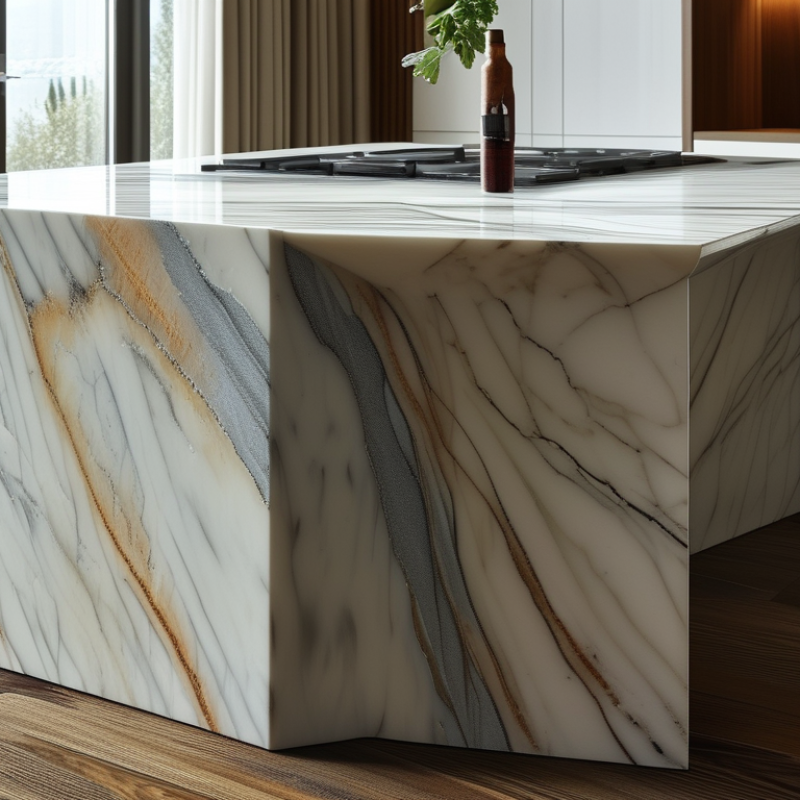
Understanding Thermal Conductivity in Different Materials
When you touch marble, it often feels colder than granite or wood. This sensation is closely linked to thermal conductivity. Thermal conductivity measures how well a material transmits heat. Marble has high thermal conductivity, which allows it to absorb heat from your hand quickly. This creates a chilling effect that feels more intense.
Granite, while still a stone, has a lower thermal conductivity than marble. It does not draw heat from the skin as rapidly. Wood, on the other hand, is an insulator. It retains heat better and does not feel cold at all. The differences between these materials highlight the unique properties of each, influencing how we perceive temperature.
Understanding these properties can be a bit complex. Factors such as texture and density also play a role. For example, a polished marble surface feels different than a rough granite texture. Reflecting on this can deepen our appreciation for everyday materials. It's fascinating how something as simple as touch can reveal so much about the world around us.
Comparing Marble, Granite, and Wood: Composition and Density Factors
The difference in how marble, granite, and wood feel to the touch lies in their composition and density. Marble is primarily composed of calcite or dolomite, giving it a lower thermal conductivity compared to granite and wood. This trait allows marble to absorb heat more slowly, making it feel cooler when you touch it. Granite, a dense igneous rock, contains quartz and feldspar, materials that conduct heat effectively. Thus, granite can warm up much quicker than marble.
In terms of density, marble typically has a density of around 2.7 g/cm³, while granite ranges from 2.63 to 2.75 g/cm³. Wood, depending on the species, generally varies between 0.4 to 1.2 g/cm³. The higher the density, the more heat is retained. This difference explains why wood feels warm to the touch, as it doesn't absorb heat as rapidly.
Tips: When choosing materials for your home, consider how they interact with heat. If you prefer a cooler surface, marble may be ideal for kitchen countertops. However, in living areas, the warmth of wood can create a cozier atmosphere. Always test the feel of each material yourself to find what suits your comfort level best.
The Role of Surface Temperature and Heat Transfer
Marble often feels colder than granite or wood, and this sensation stems from the material's ability to conduct heat. Marble has a higher thermal conductivity than granite and wood. When you touch marble, it draws heat away from your skin rapidly. This phenomenon explains why marble surfaces can feel chilly in warmer environments. Research indicates that marble's thermal conductivity is about 2.5 W/m·K, while granite is lower at about 1.75 W/m·K. Wood, in contrast, has thermal conductivity around 0.1 to 0.2 W/m·K.
Surface temperature plays a crucial role in how materials feel to the touch. A surface with higher thermal conductivity will more effectively transfer heat away from your body. This is why marble can seem colder even if it is at the same temperature as granite or wood. The heat transfer process is not solely about temperature, but also about the material’s properties. Understanding these factors can cause us to rethink our perceptions of surface warmth and comfort.
However, our intuitive reactions might sometimes mislead us. For instance, in colder climates, all surfaces can feel chilly after extended exposure. Further research could explore how individual sensitivities to temperature vary across different environments or materials. The nuances of touch and temperature perception deserve deeper investigation, especially in everyday experiences.
Why Does Marble Feel Colder Than Granite or Wood? - The Role of Surface Temperature and Heat Transfer
| Material |
Density (g/cm³) |
Thermal Conductivity (W/m·K) |
Specific Heat Capacity (J/kg·K) |
Surface Temperature Effect |
| Marble |
2.70 |
2.5 |
900 |
Feels colder due to high thermal conductivity |
| Granite |
2.63 |
2.0 |
790 |
Feels less cold than marble due to lower conductivity |
| Wood |
0.60 |
0.12 |
1600 |
Feels warm due to low thermal conductivity |
Perception of Coldness: Human Sensation and Material Behavior
When you touch marble, it feels much colder than granite or wood. This sensation ties into how materials interact with heat. Marble has a high thermal conductivity, meaning it absorbs heat from your skin quickly. In contrast, granite and wood are less efficient at this transfer. The result? Marble feels colder upon contact.
Humans perceive temperature through our skin's sensory receptors. When something pulls heat away from your body, it feels cold. Conversely, materials that retain warmth, like wood, will feel cozy and comforting. This difference is not just psychological; it’s a physical response to how each material behaves in thermal exchanges.
Tips:
Choose marble for countertops if you want a cool cooking surface. Aim for granite or wooden elements when looking for warmth in colder climates. When designing a space, consider the sensory impact of different materials. As you explore, remember that each material has its unique character that can influence your experience.
Applications and Implications of Material Temperature Differences
The difference in temperature between materials like marble, granite, and wood can have significant implications in various fields. Marble’s cold touch can be attributed to its thermal conductivity. According to the Engineering Toolbox, marble has a thermal conductivity of about 2.5 W/m·K, compared to wood’s 0.15-0.23 W/m·K. This property allows marble to absorb and conduct heat away faster than granite and wood. Architects and designers often leverage this characteristic in public spaces. For example, marble flooring can enhance comfort in hot climates, while wood can be more suitable in warmer settings.
Understanding these thermal properties also affects energy efficiency and sustainability. Any building material's heat retention can lead to increased energy costs. A study published in the Journal of Sustainable Architecture shows that environments with high thermal mass, like marble, can help reduce energy consumption by up to 15%. However, not all climates benefit from such materials. In regions with colder temperatures, the cold touch of marble can make spaces feel uninviting. Designers need to be careful, as the choice of materials may unintentionally impact user comfort.
Moreover, the psychological effects of temperatures in materials cannot be ignored. Cool surfaces like marble may evoke a sense of luxury but can increase discomfort in colder climates. This raises questions about how material choices reflect not just aesthetics but also human experience. More research is needed to fully understand these nuances and make informed decisions in design.
Why Does Marble Feel Colder Than Granite or Wood?
This chart illustrates the thermal conductivity of three different materials: Marble, Granite, and Wood. Marble's higher thermal conductivity explains why it feels colder to the touch compared to the other materials, especially in cooler environments.
FAQS
: The materials compared are marble, granite, and wood.
Marble absorbs heat more slowly, making it feel cooler to the touch.
Granite has a density of 2.63 to 2.75 g/cm³, while marble’s density is around 2.7 g/cm³.
Wood’s lower density, typically between 0.4 to 1.2 g/cm³, contributes to it feeling warm when touched.
Consider how each material interacts with heat and how it feels to your touch.
Marble is ideal for a cool cooking surface.
Materials interact with heat differently, affecting our perception of temperature and comfort.
No, it's essential to consider the tactile experience and thermal behavior too.
Yes, wood retains warmth and creates a comforting atmosphere.
Physically touch and feel each material to determine what suits your comfort level best.
Conclusion
Marble is often perceived as feeling colder than granite or wood, and this sensation can be attributed to several factors related to thermal conductivity. Understanding the thermal properties of these materials reveals that marble has a higher thermal conductivity compared to granite and wood. This means that marble can absorb heat from the skin more efficiently, resulting in a cooler sensation when touched.
Moreover, the composition and density of marble contribute to its thermal behavior. While granite has a similar density, wood, being a poor conductor, does not transfer heat as effectively. The surface temperature of materials also plays a crucial role in heat transfer, impacting how we perceive temperature. Ultimately, the sensation of coldness is not only a physical property of the materials but also a subjective experience influenced by human sensory responses. Thus, understanding "why does marble feel colder than granite or wood" extends beyond mere material properties to encompass the complexities of human perception and environmental interactions.
 Zahran Marble
